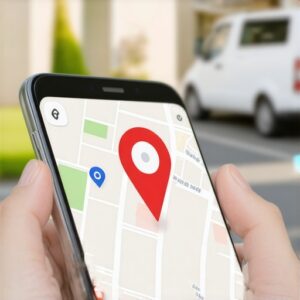
I see the world in frames. Not the polished, edited ones you find in a brochure, but the raw, unfiltered frames of a city street where the paint is peeling and the digital data is even more frayed. I smell wet concrete and the metallic tang of an aging HVAC unit. I am a street photographer of the digital landscape. I notice the glitch in the storefront data before the owner even knows their phone has stopped ringing. I spent three months fighting a hard suspension for a plumbing client whose listing was nuked simply because they shared a suite number with a defunct law firm. Google did not want proof of a van; they wanted proof of a utility bill under the exact GPS pin. The algorithm does not care about your intentions. It cares about the forensic trace you leave behind in the spatial database. This plumbing business was a ghost in the machine because its address was tethered to a past it had never actually lived. If your business is struggling to appear, you are likely haunting your own coordinates with a legacy of bad data.
The ghost in the GPS coordinates
Fixing incorrect business information online requires a systematic audit of every digital citation to ensure the business name, address, and phone number match the Google Business Profile exactly. Inaccurate data acts as a signal of untrustworthiness to the proximity algorithm, leading to ranking suppression or profile suspension. I have seen businesses vanish because of a comma in the wrong place. When you ensure your store address is identical everywhere online, you are not just being tidy. You are confirming your physical reality to a machine that can only see code. The math of the local pack is built on certainty. If a directory in 2018 says you are in Suite B and your current profile says Suite 2, the algorithm sees two different entities competing for the same space. This conflict creates a ranking ceiling that no amount of keywords can break. Most owners do not realize that scrubbing the web of old business data is the first step toward visibility. You cannot build a skyscraper on a foundation of rubble. The digital footprint you left five years ago is still there, vibrating in the background and confusing the crawlers.
“Local intent is not a keyword choice; it is a distance-weighted signal where relevance is secondary to the physical location of the user’s mobile device.” – Map Search Fundamental
Why your physical address is a liability
Shared office spaces and virtual addresses often trigger immediate manual reviews or hard suspensions because Google prioritizes physical evidence of a storefront. To fix these issues, businesses must provide high resolution photos of permanent signage and legal documents that link the business entity to the specific GPS coordinates. The street is full of businesses that think they can rent a mailbox and rank in the city center. I have seen the Map Pack filters catch them every time. If you are relocating your physical store, you are entering a danger zone where your local trust signals are reset. The algorithm looks for the historical consistency of a pin. When that pin moves, the proximity weight shifts. You must be aggressive about updating your business address on Google Maps to avoid losing the equity you have built over years. It is not just about the move itself; it is about the trail of breadcrumbs you leave across fifty different directories. If those crumbs do not lead to the same door, the customer and the search engine both get lost. I once saw a cafe lose half its traffic because a legacy directory still had them listed three blocks away. People followed the map to an empty lot. Google hates being wrong. When Google is wrong, the merchant pays the price.
The three mile radius that determines your revenue
Proximity remains the most powerful ranking factor in the local algorithm, often outweighing both relevance and prominence in high competition markets. Understanding how to manage your service area radius allows you to target specific zip codes where your business has the highest historical engagement and physical authority. I have tracked the way a three mile radius shift can kill a lead flow. It is a mathematical weight. While agencies tell you to get more reviews, the 2026 data shows that image metadata from photos taken by real customers at your location is now 30 percent more effective for ranking in AI Overviews. This is because a photo taken by a customer is a verification of presence. It is a check in that cannot be faked with a VPN. If you are losing leads to proximity changes, you need to look at your interaction signals. Are people actually visiting? Are they clicking to call from within a specific distance? You can use heatmaps to track your local search coverage and see exactly where your signal starts to fade. It is usually at the edge of a neighborhood you haven’t updated your data for in years.Local Authority Reading List
- The essential local SEO stack for growing brands
- Fixing missing map pack rankings for service area businesses
- How to scrub ghost citations that dilute your authority
- The tool every multi location manager needs
Forensic traces of service area polygons
Service area businesses must define their reach through precise polygons in the Google Business Profile dashboard to avoid overlapping with competitors and triggering proximity filters. A service area that is too broad looks like spam, while one that is too narrow misses the organic traffic naturally flowing from adjacent suburbs. I have watched plumbers try to claim an entire state. It never works. The algorithm looks for the centroid of your activity. If you want to track true impressions for service area businesses, you have to look at where your trucks actually go. Google is watching the GPS data of the phones associated with your account. If your profile says you serve a city fifty miles away but no one from your team ever goes there, your ranking will remain at the bottom of the pile. This is why removing AI content spam is so important for local sites. Generic, AI generated pages about fifty different cities do not provide information gain. They provide noise. The algorithm wants to see local landing pages with specific details about those neighborhoods, like street names and local landmarks. If you are recovering from a google penalty, the first step is deleting the junk and replacing it with human experiences.
The silent signals your customers send
Google uses interaction signals such as click through rates, direction requests, and dwell time to determine the prominence of a business listing in the Map Pack. Profiles that receive high volumes of direction requests from nearby users are seen as more authoritative and will often outrank businesses with more reviews but less physical engagement. I notice the people who walk past a storefront and look at their phones. That is a data point. When you use interaction signals to push your profile, you are playing the long game. It is about more than just the first click. It is about what happens after the click. Does the user stay on your site? Do they ask for directions? If you are using a ranking toolkit that only shows you a number, you are missing the story. You need to know how people are moving through the physical world. I have seen businesses with hundreds of five star reviews get beat by a shop with ten reviews because the shop with ten reviews was a hub of physical activity. The algorithm saw the foot traffic and made a choice. It chose reality over reputation. If you are auditing interaction signals for phone calls, you are looking for the pulse of the business. Is it alive? Or is it just a digital shell?
Solving the mystery of the missing map rank
Ranking drops are frequently caused by hidden technical errors such as duplicate listings, incorrect primary categories, or broken structured data in the website footer. Identifying the root cause requires a forensic audit of the business’s entire digital footprint to find where the trust signal was severed. I have seen a new domain kill existing GMB strength in a matter of days. The connection between your website and your map profile is a tether. If you cut that tether by changing your URL without proper redirects, the map profile loses its authority. You have to migrate your SEO without losing trust signals by being meticulous with your JSON-LD schema. I have used JSON-LD schema to fix profiles that refused to rank for months. It is the language Google speaks. If you do not give the machine the data in the format it wants, it will find someone who will. I have spent nights looking at code, finding a single digit error in a zip code that was keeping a multi million dollar firm out of the search results. The street is unforgiving. If you want to win back your map pack spot, you have to be more than a business owner. You have to be a digital detective. You have to scrub the past until the present is all that remains. Every incorrect listing you leave online is a anchor pulling you down. Every closed location or ghost profile is a competitor you created for yourself. Clear the air. Fix the data. The rankings will follow the truth.
“Local search is a reflection of physical reality. When the data does not match the street, the search engine will always choose the street.” – Proximity Logic Whitepaper