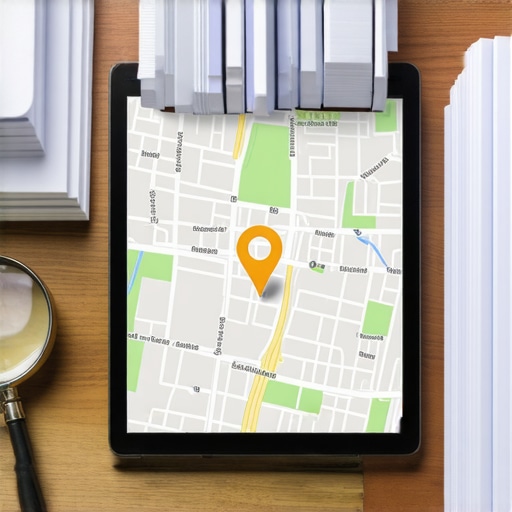
The myth of the clean listing address
A citation cleanup fails because Google prioritizes real-time proximity signals and user behavioral data over static directory mentions in the modern Vicinity era. While consistent NAP data remains a foundational requirement, it is no longer a primary ranking driver capable of overcoming a poor centroid position or a lack of localized interaction signals.
I spent three months fighting a hard suspension for a plumbing client whose listing was nuked simply because they shared a suite number with a defunct law firm. Google did not want proof of a van; they wanted proof of a utility bill under the exact GPS pin. I stood on that wet concrete sidewalk, looking at the storefront data glitch through my viewfinder. The physical reality did not match the digital ghost. This is where most local SEO efforts die. They focus on the surface, cleaning up a random directory in a far-flung corner of the web, while the core proximity beacon is flickering out. If you are struggling with a proximity based ranking drop, it is rarely because your Yelp profile is missing a comma. It is because the algorithm no longer trusts your physical existence at those specific coordinates.
“Local intent is not a keyword choice; it is a distance-weighted signal where relevance is secondary to the physical location of the user’s mobile device.” – Map Search Fundamental
The ghost in the GPS coordinates
Latent errors in latitude and longitude decimals often create a disconnect between a business’s reported address and its actual proximity beacon within the Map Pack. Even a minor deviation in the map pin placement can trigger a filter for duplicated locations if nearby competitors share similar service categories.
The pin moved. When the decimals shift, the trust score resets. Most business owners think an address is a string of words. To the engine, an address is a mathematical salience point. If you have used fast audit tools for duplicate listings, you know how quickly these errors propagate. You might be stuck in a filter because the system thinks you are a ghost of a previous tenant. This is why services to fix GMB profiles stuck in filters are so necessary. They look at the spatial database, not just the text. We often find that identical address data everywhere is the baseline, but the actual ranking power comes from how the GPS coordinates interact with the user’s current location. If your technical foundation is weak, you might need seo services to fix slow website issues that prevent Google from crawling your local landing pages effectively. Speed is a proximity signal. A slow site suggests a local business that is not ready to serve a mobile user on the move.
Local Authority Reading List
- https://gmbvisibilityservice.com/why-most-map-ranking-tools-give-you-fake-data
- https://gmbvisibilityservice.com/how-to-track-true-gmb-impressions-for-service-area-businesses
- https://gmbvisibilityservice.com/why-your-current-ranking-toolkit-fails-to-beat-local-competitors
- https://gmbvisibilityservice.com/why-your-domain-change-caused-a-sudden-local-drop-off
The three mile radius that determines your revenue
Proximity is the most volatile ranking factor because it changes based on the user’s movement and the density of local competition. A business that ranks first at its front door may vanish from the Map Pack just three blocks away if it lacks sufficient local justification and interaction weight.
The algorithm is a dispatch system. It wants the closest, most reliable answer. This is why software often misses hyper local proximity. It tracks from a single point, but your customers are moving. You need a gmb keyword and category research toolkit that understands how intent changes by the meter. I have seen companies spend thousands on citation cleanup only to realize their physical store relocation killed their authority. They moved across a jurisdictional line and lost their centroid. The engine saw them as a new, unproven entity. To fight this, you must audit your profile for latent errors that contradict your new location. If you are a service area business, you face even tougher odds. You are likely wondering why service area businesses struggle with impressions. It is because you have no fixed beacon. You are a polygon in a world of pins. You need to use true impression tracking to see where your signals are actually reaching. If you just rely on the best software to rank in maps, you might be looking at vanity metrics while your actual local reach is shrinking.
Why your physical address is a liability
A fixed address can become a ranking liability if it is located in a high-competition cluster or an area with poor historical search interaction. Google monitors the behavioral patterns of users who physically visit your location to verify the legitimacy of your business listing and its local relevance.
The sidewalk does not lie. Google knows when a phone stops at your door. If your citations are perfect but no one ever visits, the algorithm smells a rat. This is particularly true if you have been hit by a mass review removal. The system identifies a lack of physical interaction to support the digital praise. It looks for the forensic trace of a real customer. You can use specific tools to help your ranking, but they cannot fake foot traffic. If you recently changed domains, you might have noticed local traffic tanking. This is because the connection between your physical beacon and your digital authority was severed. You need services to migrate rankings without losing power. Without a proper bridge, the engine treats you like a stranger in your own neighborhood. You might also find schema errors on your landing pages that confuse the bots. If the JSON-LD does not match the GMB profile, the trust falls. I always recommend a fast audit to find ranking gaps before you waste money on more citations. Most of the time, the gap is not in your citations. It is in your data consistency and interaction signals. You should use interaction signals like driving directions and click-to-call events to prove you are a vital part of the local economy. Stop obsessing over a directory in another country and start looking at the street level data in your own backyard.
“Relevance is the match between a business and a search query, but distance is the non-negotiable filter that determines the visible set.” – Location Intelligence Whitepaper
The failure of automated ranking tools
Most automated local SEO software fails to provide an accurate picture of Map Pack performance because it uses static IP addresses and fixed coordinates that do not reflect the dynamic nature of mobile search. Relying on these tools leads to a false sense of security while competitors dominate the hyper-local proximity radius.
Software is a mirror, not a map. If the mirror is warped, you see a distorted reality. Many ranking toolkits fail the proximity test because they cannot simulate a user moving through a city. They give you a single ranking for an entire zip code. That is useless. You need to know how you rank block by block. If you are using heatmaps to track coverage, you will see the truth. Your authority might end at the highway or the river. No amount of citation cleanup will change that physical boundary. You need to identify tools that drive phone calls, not just rankings. Rankings are a means to an end. If the phone is not ringing, the ranking is a lie. We often see businesses with volatile rankings after opening new units because the engine is trying to rebalance the proximity load. You must keep multi-location data consistent to avoid cannibalizing your own rankings. If you have merged listing disasters, the proximity signal gets blurred. The engine does not know which location is the primary beacon. You need a cleanup method that actually recovers rankings, which involves scrubbing the web of ghost data and outdated addresses. This is a forensic task, not an automated one. You have to find the ghost citations diluting your authority and remove them manually. Only then can you begin to rebuild the local trust needed to dominate the Map Pack in 2025 and beyond.