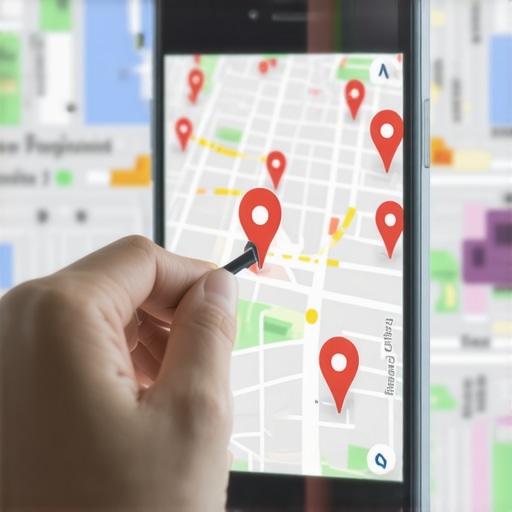
The forensic trace of a broken listing
I remember the smell of wet concrete after a summer storm in Chicago while I was photographing a storefront for a plumbing client. I spent three months fighting a hard suspension for that plumbing client whose listing was nuked simply because they shared a suite number with a defunct law firm. Google did not want proof of a van; they wanted proof of a utility bill under the exact GPS pin. This is the reality of the local search layer. It is not a digital storefront; it is a physical signal that must be synchronized across a thousand data points. When junk citations enter the mix, they act like static on a radio, blurring your proximity until the algorithm simply ignores your existence. You need to understand that cleaning up messy citations is not a vanity project. It is the primary way to fix a suspended Google Business Profile fast while ensuring your NAP consistency across the Knowledge Graph remains ironclad for local search rankings in 2025.
The problem begins when old data from aggregators like Data Axle or Localeze gets scraped and mutated. A business that changed locations five years ago might still have a ghost listing floating in a dead directory. That ghost is stealing your authority. If you want to stop the bleed, you must start by scrubbing ghost citations that are diluting your local authority. These invisible errors tell Google that your business is unreliable. If the algorithm cannot decide where you are, it will not show you to the customer standing two blocks away.
[image_placeholder]
The mathematical weight of local review sentiment
Review sentiment analysis uses natural language processing to identify local justification triggers within a Google Business Profile. This behavioral data influences the Map Pack ranking by measuring the frequency of service-specific keywords mentioned by verified local guides who have a physical history at your GPS coordinates.
I have watched businesses with five hundred reviews get outranked by a shop with fifty. Why? Because the shop with fifty had reviews that mentioned specific local landmarks and streets. The algorithm is looking for proof of life. When you are responding to reviews, you are not just being polite. You are feeding the machine. Many owners think that automated review tools save time, but why automating your google reviews often backfires is because they lack the linguistic nuance of a local resident. They sound like robots, and the spam filters can smell it from a mile away. You need the grit of real human interaction to move the needle.
“Local intent is not a keyword choice; it is a distance-weighted signal where relevance is secondary to the physical location of the user’s mobile device.” – Map Search Fundamental
The three mile radius that determines your revenue
Proximity engineering focuses on the centroid of a search query relative to the physical address listed in your NAP data. By optimizing hyper-local signals such as neighborhood-specific schema and local news mentions, businesses can overcome the vicinity update filters that often hide service area businesses from nearby mobile users.
If you are a contractor, your visibility is a moving target. The moment you cross a zip code boundary, your ranking might drop from first to fifteenth. This happens because your proximity signals are weak. I often see companies trying to expand by using fake office addresses, but that is a death sentence. Instead, you should focus on expanding your map reach without fake addresses by leveraging real customer check-ins and project photos with embedded GPS metadata. This creates a forensic trail of your activity that Google cannot ignore. It proves you were actually there, working on a house, in that specific neighborhood.
Cleaning up messy citations without breaking your budget
Citation cleanup involves the manual identification and removal of duplicate listings, mismatched phone numbers, and incorrect store hours across Tier 1 and Tier 2 directories. This process improves algorithmic trust by providing a singular source of truth for search engine crawlers investigating your local business entity.
Most people think they need an expensive subscription to manage their citations. They are wrong. You can start by cleaning up citations manually using free tools and simple search operators. The most dangerous errors are the ones you cannot see, like hidden structured data errors on your own website. If your JSON-LD schema says you close at 5 PM but your GMB says 6 PM, you are triggering a manual review. I have seen why your business hours history can cause a sudden drop in rankings simply because the data became inconsistent over several months of minor updates. Accuracy is the only currency that matters here.
The move to reclaim rankings after a map pack ghosting incident
Reclaiming rankings requires a forensic audit of interaction signals, click-through rates, and bounce rates from local landing pages. By fixing broken schema and removing AI content spam, a shadowbanned profile can recover impressions and re-establish its position within the top three results of the local search ecosystem.
When a listing disappears, owners panic. They start changing everything at once. This is the worst thing you can do. You have to be like a photographer waiting for the right light. You move one thing at a time. First, you check for duplicate map listings that might be stealing your customers. Then, you look at your NAP consistency. One plumber I worked with had his listing vanish because an old employee had registered the business on a minor directory with the wrong phone number. That one typo was enough to kill the leads. Once we did the cleanup of inconsistent phone numbers, the calls started coming back within forty-eight hours. The machine wants order, not chaos.
“Consistency across the ecosystem is the primary driver of trust in local search, as mismatched data signals a lack of operational stability.” – Local Search Intelligence Report
Local Authority Reading List
- The only checklist for actual phone calls
- Beating the 2026 local algorithm
- Spotting the errors your agency ignores
- Why most audits fail to find the problem
How to get more calls from google business profile toolkit
Maximizing call volume from a Google Business Profile relies on optimizing the primary category, secondary categories, and call-to-action buttons. By analyzing interaction signals and customer heatmaps, businesses can identify conversion gaps where high impressions fail to turn into actual phone calls or store visits.
Ranking is just the first step. If people see your listing but do not call, you have a conversion problem. Often, this is because of how your business profile is quietly killing your lead flow through poor image choices or missing local service attributes. You need to use the gmb audit and ranking toolkit to see what your competitors are doing better. Are they using better trust signals? Do they have a higher click-through rate because their photos show a friendly face instead of a stock image? In my experience, a grainy photo of a real truck parked on a local street will always outperform a professional studio shot. People want to see the glitch in the matrix; they want to know you are real. By focusing on interaction signals that push you above the fold, you can ensure that your visibility actually pays the bills.