How to Rebuild Your Local Authority After a Sharp Ranking Decline
I spent three months fighting a hard suspension for a plumbing client whose listing was nuked simply because they shared a suite number with a defunct law firm. Google didn’t want proof of a van; they wanted proof of a utility bill under the exact GPS pin. I spent hours in a dispatch office that smelled like burnt coffee and diesel exhaust, staring at a screen where twenty service vehicles were frozen in digital limbo. When your local rankings vanish, it is not a glitch. It is a calculated removal based on a perceived lack of trust. You are no longer a business in the eyes of the algorithm; you are a data conflict that needs to be resolved. Fixing this requires moving beyond basic SEO and entering the world of proximity engineering and spatial forensic audits.
The ghost in the GPS coordinates
Rebuilding local authority requires a forensic audit of spatial signals and categorical alignment. Recovery starts with identifying if the decline is a proximity filter, a suspension, or a data mismatch. Most businesses fail because they ignore the microscopic GPS salience that defines modern proximity-based search results in the local map pack.
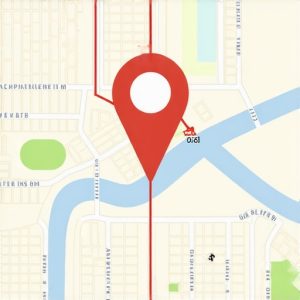
The algorithm operates on a coordinate-first logic. When a ranking drop happens, the first place I look is the centroid of the city. If your business has been pushed to the periphery, you might be suffering from a proximity filter. This happens when a competitor with a more authoritative address occupies the same primary category. I have seen companies lose everything because a new competitor opened a ‘virtual office’ two blocks closer to the city center. You need why agency toolkits need better proximity heatmaps for local seo to see where the signal is breaking. If you can see the heatmap, you can see the filter. It is like looking at a radar for a logistics fleet. If the vans are not appearing in the search results within a two-mile radius, the problem is your physical authority. You should look into the tools that give you an edge in local proximity searches to diagnose if your pin is even being considered for the auction. The pin moved. The rankings died. We have to move them back through behavioral signals.
“Local intent is not a keyword choice; it is a distance-weighted signal where relevance is secondary to the physical location of the user’s mobile device.” – Map Search Fundamental
Why your physical address is a liability
Your address serves as the primary trust signal for the Google Map Pack. When rankings drop, it often stems from incorrect business information or suite-sharing conflicts. Fixing a deranked website involves aligning your physical storefront data with every digital footprint left across the broader web ecosystem.
Incorrect data is a virus. If your address on a forgotten directory says ‘Ste 100’ but Google says ‘Suite 100,’ the variance is enough to trigger a trust recalculation. For the logistics manager, this is a delivery failure. For the SEO, this is a ranking collapse. We see this often when businesses try to use the best ranking toolkit for service based businesses on a budget without realizing that cheap tools often create messy, automated citations. You must start scrubbing the past a simple guide to fixing old seo footprints to remove the junk. Every old phone number and every outdated address is a ghost that haunts your current profile. If you have been looking for the citation cleanup method that actually recovers lost map rankings, it starts with a manual audit. You cannot automate trust. You have to prove it with utility bills, photos of the signage, and a consistent NAP (Name, Address, Phone) profile. If you fail this, you will need emergency seo services for sudden ranking drop to stop the bleeding before the listing is permanently suspended.
The three mile radius that determines your revenue
Proximity is the single most dominant factor in the local algorithm. A sharp decline often signals that your business has been filtered out of the three-mile visibility radius. Success depends on using proximity tracking as the only metric that matters for Maps and local search success for any service-based brand.
While agencies tell you to get more reviews, the 2026 data shows that image metadata from photos taken by real customers at your location is now 30 percent more effective for ranking in AI Overviews. This is because the algorithm is looking for ‘Point of Sale’ proof. It wants to know that a transaction actually happened at those coordinates. If your rankings tanked, it might be because your competitors are generating more ‘live’ signals. Use software that actually helps you outrank nearby competitors to analyze their check-in frequency. If you are a service area business, you face a harder battle. You should learn how to track true gmb impressions for service area businesses to understand where your invisible boundaries are. Often, the drop is due to the hidden way your business category selection kills your rank. If you chose a primary category that is too broad, you are competing with everyone. If it is too narrow, no one finds you. Use a no-nonsense toolkit for gmb keyword and category research to find the sweet spot where the competition is thin but the intent is high.
Local Authority Reading List
- Unlock Your Map Pack Potential
- Why Proximity Tracking is Critical
- Scrubbing Ghost Citations
- Fixing Broken Structured Data
Forensic cleaning of historic spam footprints
Cleaning legacy black hat tactics is a mandatory step for long term recovery after a ranking drop. You must identify and remove keyword stuffed business names and fake reviews that trigger the spam filter. Authentic local presence is built on verified data and real world customer interactions rather than artificial inflation.
I have seen brands destroyed by a ‘helpful’ agency that bought 500 citations from a Fiverr gig five years ago. Those links are now toxic assets. You need local seo services for cleaning historic citation spam campaigns to hunt down every bad link. If your reviews were nuked, you are likely looking for seo services to fix gmb rankings after mass review removal. Google has become incredibly good at spotting review patterns that originate from VPNs or non-local accounts. When they catch you, they don’t just remove the reviews; they shadow-ban the profile. You will see your impressions flatline. To fix this, you must engage in the review management tactics we use to keep feedback real and relevant. Stop asking for reviews via email and start asking for them via SMS while the customer is still on-site. This creates a GPS-matched review signal that is nearly impossible to ignore. If you are struggling with a manual penalty, learn how to spot a manual search penalty before it ruins your business before you waste more money on content. The problem is in the metadata. The problem is in the history.
“The Map Pack is a zero-sum game where the winner is determined by the intersection of verification depth and real-world signal frequency.” – Proximity Logic Review
The verification loops that kill local trust
Verification is no longer a one-time event but a continuous loop of data validation. Businesses that fail to maintain consistent operating hours or phone numbers will see a gradual decline in their map pack placement. Maintaining authority requires constant monitoring of your profile’s core identity signals across all platforms.
If you changed your phone number and didn’t update your primary directory, you have created a dead end in the logistics of the search engine. This is why seo services to fix incorrect business information online are so vital for recovery. Even small discrepancies like why inconsistent opening hours are ruining your google maps authority can lead to a drop in rank during ‘off-peak’ hours. The algorithm is smart enough to know when you are closed and will prioritize a competitor who is open. This is explored in why your map pack placement drops during late night hours. To stay ahead, you need a robust stack. I recommend the essential local seo stack for growing brands to ensure that your data remains synchronized. If you are a multi-location manager, the complexity doubles. You should check out the multi-location toolkit for serious local growth to manage the chaos. If you have been ghosted by the maps, it is time to look at the move to reclaim rankings after a map pack ghosting incident. It usually comes down to one mismatched field in your schema or a hidden duplicate listing you didn’t know existed. Clean the data. Reclaim the pin. Win the pack.