The Audit Strategy for Uncovering Ghost Listings That Hurt Your SEO
The smell of diesel fumes and cold coffee always reminds me of the three months I spent fighting a hard suspension for a plumbing client. Their listing was nuked. It vanished into the void because they shared a suite number with a defunct law firm from five years ago. Google did not want a photo of a van; they demanded proof of a utility bill under the exact GPS pin. This is the reality of the hyper-local layer. I have spent 20 years investigating map spam and treating business listings as proximity beacons rather than simple profiles. If your data is dirty, your rankings are dead. I despise address rentals and agencies that push citation blasts to directories that no one visits. My mission is to fix the flow of local data so your service area workers are never idling in a dead zone.
The ghost in the GPS coordinates
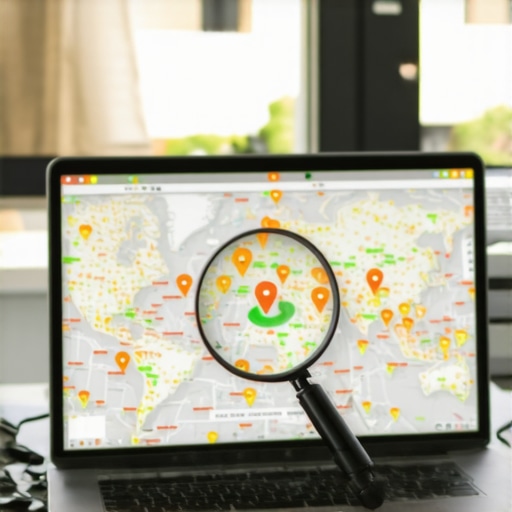
Ghost listings represent duplicate Google Business Profiles or obsolete citations that exist at spatial coordinates no longer tied to your operational headquarters. These zombie records confuse the Google algorithm by creating NAP inconsistency which triggers internal filters and suppresses your Map Pack visibility across all mobile search devices. The pin on the map is more than a marker; it is a mathematical weight. When Google sees two markers for the same entity, it divides the trust score. The result is a ranking drop that software alone cannot explain. You must verify the microscopic data points of your latitude and longitude. I have seen rankings recover overnight just by [scrubbing the web of old and incorrect business data](https://gmbvisibilityservice.com/scrubbing-the-web-of-old-and-incorrect-business-data) to ensure only one beacon is active. This is why a [fast audit for identifying duplicate google business listings](https://gmbvisibilityservice.com/the-fast-audit-for-identifying-duplicate-google-business-listings) is the first step in any recovery plan.
Why your physical address is a liability
Physical addresses in shared office spaces or multi-unit buildings often lead to algorithmic suppression due to proximity overlap. Google filters out competing businesses at the same geographic centroid to provide diverse search results, meaning your listing authority is constantly battling hidden neighbors for local relevance. If you are in a building with ten other contractors, you are in trouble. The algorithm uses a filter to prevent the Map Pack from being dominated by a single office building. You need to understand [why your business profile ghosted nearby customers](https://gmbvisibilityservice.com/the-real-reason-your-business-profile-ghosted-nearby-customers) even when your SEO looks perfect on paper. Often, the liability is the legacy data from the tenant who occupied your suite in 2018. Their ghost is still haunting your rankings. I recommend [cleaning up the mess of closed locations and ghost profiles](https://gmbvisibilityservice.com/cleaning-up-the-mess-of-closed-locations-and-ghost-profiles) immediately to clear the digital air. This is a manual job. Automation misses the nuance of suite numbers and floor levels.
“Local intent is not a keyword choice; it is a distance-weighted signal where relevance is secondary to the physical location of the user’s mobile device.” – Map Search Fundamental
The three mile radius that determines your revenue
Proximity filters act as a geofenced barrier that limits your search impressions based on the user location relative to your verified business pin. As Google prioritizes hyper-local results, your ranking potential decays exponentially once a mobile user moves beyond a three-mile radius from your verified address. This is the physics of search. You can have the best backlinks in the world, but if your profile is anchored to a location with poor interaction signals, you will lose to the guy around the corner. Using [heatmaps to track your local search coverage](https://gmbvisibilityservice.com/using-heatmaps-to-track-your-local-search-coverage) reveals the truth about where you actually exist in the eyes of the consumer. If you see a sudden dip, it might be because [new competitors are crowding your proximity radius](https://gmbvisibilityservice.com/why-new-competitors-are-crowding-your-proximity-radius). You cannot fight geography with keywords alone. You fight it with behavioral data and [interaction signals to push your profile above the fold](https://gmbvisibilityservice.com/how-to-use-interaction-signals-to-push-your-profile-above-the-fold).
Forensic audit of the local map pack
Forensic audits involve examining interaction signals, review velocity, and category associations to identify ranking gaps and manual penalties. By analyzing competitor behavioral patterns and metadata signatures, an investigator can uncover why a Google Business Profile is sliding or why Map Pack placements are volatile during peak business hours. Most agencies just look at a rank tracker. I look at the [hidden reasons your business profile ranking is slowly sliding](https://gmbvisibilityservice.com/the-hidden-reasons-your-business-profile-ranking-is-slowly-sliding). Are your opening hours inconsistent? That is a trust killer. You must [resolve inconsistent business hours across 50 directories](https://gmbvisibilityservice.com/how-to-resolve-inconsistent-business-hours-across-50-directories) to satisfy the verification loops. Data shows that [why inconsistent opening hours are ruining your google maps authority](https://gmbvisibilityservice.com/why-inconsistent-opening-hours-are-ruining-your-google-maps-authority) is one of the most overlooked factors in local search. The audit must be ruthless. No stone left unturned.
Local Authority Reading List
- How to scrub ghost citations that are diluting your local authority
- Why most google business profile software misses hyper local proximity
- How to spot a manual search penalty before it ruins your business
- The proximity recovery plan winning back map pack spots near your store
- Why service area businesses struggle with map impressions
The math of a local check in signal
Interaction signals such as check-ins, driving directions, and call-to-action clicks serve as behavioral proof of a business entity’s physical presence. Google measures the GPS pings of mobile devices that dwell at your coordinate point to determine if your listing is a legitimate local destination or a spammy ghost office. If 100 people search for you but no one clicks the directions button, your relevance score tank. This is why [how to audit your gmb interaction signals for actual phone calls](https://gmbvisibilityservice.com/how-to-audit-your-gmb-interaction-signals-for-actual-phone-calls) is so vital. You need real people interacting with your pin. While some focus on review count, I focus on the [review management tactics we use to keep feedback real and relevant](https://gmbvisibilityservice.com/the-review-management-tactics-we-use-to-keep-feedback-real-and-relevant). The algorithm can detect the forensic trace of a fake review from a mile away. It looks for the VPN signature and the lack of a location history on the user profile. Do not take shortcuts. Use [seo services to debug ranking drops with clean backlinks and content](https://gmbvisibilityservice.com/effective-gmb-boost-services-to-dominate-local-maps-in-2025) instead of buying junk.
The hidden way your business category selection kills your rank
Primary categories on Google Business Profile act as the top-level taxonomy that defines your search universe and proximity radius. Selecting an incorrect primary category or over-optimizing with redundant sub-categories creates keyword cannibalization and causes your listing to be filtered out for high-intent local searches. I have seen a plumber lose 40 percent of their traffic because they changed their primary category to general contractor. This [hidden way your business category selection kills your rank](https://gmbvisibilityservice.com/the-hidden-way-your-business-category-selection-kills-your-rank) is a silent killer. You need to [stabilize your rankings after changing gmb primary categories](https://gmbvisibilityservice.com/stabilizing-your-rankings-after-changing-gmb-primary-categories) by reinforcing the change with [structured data on your local landing pages](https://gmbvisibilityservice.com/the-step-by-step-way-to-fix-schema-errors-on-your-local-landing-pages). If the website says one thing and the profile says another, the trust breaks. The machine sees a conflict and demotes you. You must be precise with your [gmb keyword and category research](https://gmbvisibilityservice.com/a-no-nonsense-toolkit-for-gmb-keyword-and-category-research) to avoid these traps.
“A business is not a name; it is a coordinate point in a spatial database that must be verified by recurring behavioral signals from mobile handsets.” – Proximity Logic Whitepaper
Recovering from a manual search penalty
Manual search penalties occur when Google’s spam team identifies TOS violations such as keyword-stuffed names, fake addresses, or malicious review manipulation. To recover rankings, you must perform a total data scrub, remove violating content, and submit a reinstatement request backed by forensic proof of physical business operations. I have been in the trenches for [the reinstatement war](https://gmbvisibilityservice.com/what-to-do-the-moment-your-google-business-profile-gets-suspended) more times than I can count. It is not about being nice to support; it is about being undeniable with your evidence. If your agency is [ignoring map pack errors](https://gmbvisibilityservice.com/how-to-spot-the-map-pack-errors-your-seo-agency-is-ignoring), they are failing you. You need [seo audit and penalty recovery services](https://gmbvisibilityservice.com/the-tactics-we-used-to-overcome-a-3-month-maps-ranking-slump) that understand the difference between a soft and hard suspension. Sometimes the problem is [over optimized anchor text](https://gmbvisibilityservice.com/scrubbing-the-past-a-simple-guide-to-fixing-old-seo-footprints) in your backlink profile that bleeds into your local trust. You have to [scrub ghost citations that are diluting your local authority](https://gmbvisibilityservice.com/how-to-scrub-ghost-citations-that-are-diluting-your-local-authority) to start fresh. The pin moved. The data changed. Now you must adapt or disappear from the map entirely.