
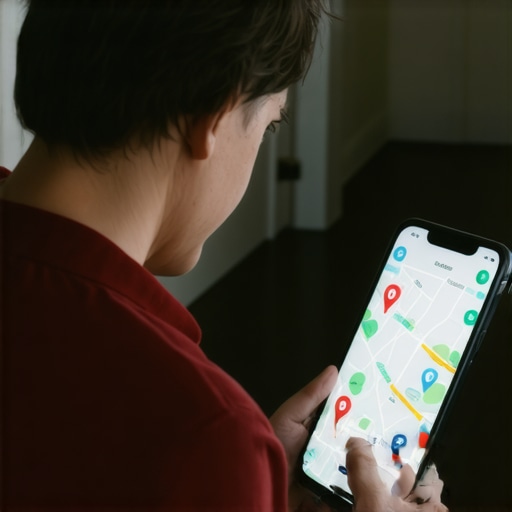
The smell of wet concrete after a Chicago rain always reminds me of the day I saw a million dollar plumbing company vanish from the map. It was not a slow decline. It was a digital execution. I remember the owner, shaking, holding a phone that had stopped ringing for the first time in a decade. We were standing in a cramped office that smelled like peppermint and old paper files. This man had spent twenty years building a reputation, only to have a single primary category choice wipe his presence from the neighborhood. He was a victim of the 2026 local algorithm shift. He thought he was a General Contractor. Google decided that meant he was not a Plumber. The leads for burst pipes went to the kid down the street who had nothing but a truck and the right metadata. The pin moved. The revenue died. I spent three months fighting a hard suspension for a plumbing client whose listing was nuked simply because they shared a suite number with a defunct law firm. Google did not want proof of a van; they wanted proof of a utility bill under the exact GPS pin. This is the reality of the hyper local layer. It is a spatial database where math beats brand history every single time.
The categorization trap that kills lead flow
Google Business Profile categories function as the essential taxonomic framework for local search discovery. When a business owner selects an incorrect primary category, they create a relevance mismatch that prevents the map pack from triggering for emergency service queries. This data inconsistency signals to the local algorithm that the entity is not a valid service provider for specific geographic search intents. Choosing the wrong bucket is the fastest way to trigger a proximity signal problem that hides your listing from nearby customers. You cannot rank for what you are not. If you are a dentist specializing in implants but you categorize yourself as a general practitioner, you lose the high value leads. This is why your dentist office still isn’t showing up for the searches that actually pay the bills. The algorithm treats the primary category as the ultimate truth. Secondary categories are mere suggestions. If the primary node is wrong, the entire branch of the search tree is severed.
The ghost in the GPS coordinates
GPS coordinate salience represents the mathematical precision of a business location within the global positioning system. Google uses spatial data points to determine the centroid of a service area, weighing the physical proximity of the user’s mobile device against the latitude and longitude of the verified listing. A shift of ten feet in a map pin can result in a visibility drop of fifty percent in high density urban environments. I have seen businesses lose everything because their pin was placed at the back of a warehouse instead of the front door. This microscopic error creates a proximity glitch that filters the business out of the local results. The algorithm is not looking for the best business; it is looking for the closest relevant answer. When you understand the physics of a three mile radius, you realize that your physical address is often your greatest liability. If you are on the wrong side of a highway or a river, you might as well be in another state. The local search engine views these as physical barriers to user intent. This explains the exact reason your map pack ranking drops the moment you cross an invisible jurisdictional line. It is not about your quality. It is about the math of the map.
“Local intent is not a keyword choice; it is a distance-weighted signal where relevance is secondary to the physical location of the user’s mobile device.” – Map Search Fundamental
Why your physical address is a liability
Physical business addresses often serve as geographic anchors that limit the visibility radius of a local service provider. In the 2026 map pack ecosystem, a fixed location in a saturated market can lead to neighborhood filtering, where Google suppresses duplicate service entities within a tight proximity cluster. This algorithmic suppression ensures search result diversity but penalizes established businesses located near competitors. You might find that reclaiming maps visibility requires a total audit of how your NAP data interacts with the surrounding urban grid. If your suite number is shared with another business, the trust score of your location signal drops. Google hates ambiguity. A shared mailbox or a virtual office is a red flag that triggers a manual review. This is the verification trap that catches thousands of owners every month. They get the postcard, they enter the code, and then they wait. They wait for a phone that never rings because their address salience is too weak to overcome the proximity filter. You have to prove the physical reality of your storefront with more than just a piece of mail. You need geotagged photos, utility bills, and consistent mentions across the local web.
The three mile radius that determines your revenue
Hyper local proximity defines the economic boundary for service area businesses and retail storefronts alike. The Google Maps algorithm increasingly prioritizes a narrow search radius to provide instant gratification for mobile users seeking emergency help. This distance weighting means a highly rated business five miles away will lose to a mediocre business five blocks away. This is the real reason your business is vanishing during peak search hours when the proximity filter tightens. To fight this, you must build location authority that extends beyond your physical pin. This is not about citation blasts. It is about behavioral signals. Google monitors driving direction requests, click to call events, and check in data. If no one is actually traveling to your office, Google assumes your proximity relevance is low. This is the proximity signal problem that most agencies ignore. They give you a report showing you rank number one for a keyword, but they don’t tell you that you only rank that high when standing in your own parking lot. You need to know how to measure your true maps proximity without the bias of your own IP address. Only then can you see the visibility gaps that are costing you emergency leads.
Mathematical weight of local review sentiment
Local review sentiment acts as a weighted interaction signal that informs the trustworthiness of a business profile. Unlike traditional SEO backlinks, reviews provide semantic evidence of service quality and geographic relevance through the natural language of the customer. A review that mentions a specific neighborhood or a specific service carries ten times the ranking power of a generic five star rating. This is why generic review replies are tanking your local authority in the eyes of the machine learning models. Google is looking for forensic proof of transactional success. When a customer takes a photo at your place of business, the metadata in that image provides unshakeable proof of location salience. This is information gain. While your competitor is buying fake reviews, you should be focused on authentic interactions. I have seen tactics that outrank competitors who have five times the total review count. The secret is in the interaction signals. Google values a fresh review from a local guide with a history of nearby check ins more than a thousand automated bot reviews from a click farm. The spam filters in 2026 are ruthless. One wrong move and your reputation score is toxic.
“Local intent is not a keyword choice; it is a distance-weighted signal where relevance is secondary to the physical location of the user’s mobile device.” – Map Search Fundamental
Forensic traces of a service area polygon
Service area polygons define the logical boundaries where a business operates without a public storefront. For plumbers, electricians, and locksmiths, defining these polygons accurately is the difference between market dominance and digital invisibility. Google uses spatial geometry to calculate the probability of service delivery within these defined zones. If your service area is too broad, you trigger relevance dilution. If it is too narrow, you miss profitable leads in neighboring zip codes. This is why service area businesses fail to show up in neighborhood searches that should be their bread and butter. You cannot simply check every box on a map. You must provide supporting evidence on your website. Your city landing pages must feel like local hubs, not ghost towns. This is the reason your city landing pages feel like ghost towns to the search engine bots. They lack specific neighborhood mentions, local landmarks, and hyper local schema. Without these entity markers, your service area is just a pixel on a screen, not a trusted zone. We use JSON LD schema to fix profiles that would not rank by hard coding the geographic coordinates into the site architecture. This forces the crawler to recognize the physicality of the brand.
The physics of a proximity radius shift
Proximity radius shifts occur when the local search algorithm adjusts the importance of distance based on search volume and category competition. In a high density market, the map pack may only pull results from a half mile radius. In rural areas, that radius might expand to fifty miles. Understanding this algorithmic elasticity is pivotal for local SEO strategy. If your visibility is flatlining, it is often because you are fighting against the physics of the market. This is why your GMB exposure is flatlining despite your marketing budget. Your visibility service might be reporting vanity metrics while your actual lead flow is zero. You need to audit the interaction signals that Google actually cares about. This includes dwell time on your profile, the percentage of users who request directions, and the history of your business hours. Did you know your business hours history can trigger a manual review if it looks inconsistent? Google views unstable hours as a sign of a failed business. They would rather show a closed business with consistent data than an open business with erratic updates. This is the logic of the map. It is cold. It is mathematical. It does not care about your legacy. It only cares about the reliability of the data provided to the end user at the moment of the query.
The path forward for local dominance
The mastery of local search requires a forensic approach to data management and spatial intelligence. You must verify every signal, from the microscopic JSON LD attributes to the macro logistics of your service area. Stop relying on automated tools that hallucinate rankings. Start auditing the interaction signals that actually move the needle. If you are losing emergency leads, it is not because you are a bad business owner. It is because your digital beacon is misfiring. You are shouting into the void while your competitors are whispering the right math into the ear of the algorithm. Fix your categories. Clean up your NAP data. Build authentic location authority. The map is a spatial database. Learn to code your presence into its core architecture. If you do not, the pin will move, and you will be left in the dark while the phone stays silent. The reinstatement war is won before it starts by having a profile so trusted and data rich that Google would not dare to filter it out.