
I remember the moment clearly. It was late at night, and I was scrutinizing my business’s local map pack placement on Google. Despite my efforts, my listing was invisible during after-hours searches, even though I had invested heavily in what I thought were ‘effective’ visibility services. Frustration bubbled up—why was I still missing out on potential clients when everything else seemed optimized? That lightbulb moment made me realize something crucial: the signals that influence map visibility in 2026 are more complex than ever, and relying on outdated tactics is a recipe for being left behind.
Why Your Map Pack Can Feel Like a Ghost Town After Hours
In the early days, optimizing for local search was straightforward—consistent NAP information, some reviews, and voila, you’d see your business pop up. But with the new era of 3 Maps Visibility Signals, especially in 2026, the game has changed dramatically. Now, the behavior and interaction signals during after-hours searches play a significant role in whether your business appears or vanishes. I’ve learned that ignoring these signals can mean the difference between a bustling evening rush and a quiet night with no leads.
Did you know that according to Google’s own data, over 60% of local searches occur after 6 pm? Yet many visibility strategies still focus primarily on daytime metrics, neglecting the critical after-hours window where most competitors are asleep at the wheel. This realization pushed me to delve deeper into the specific signals that determine visibility when it counts the most.
One mistake I made early on was thinking that increasing review quantity alone would boost my rankings. Instead, I overlooked how engagement signals during off-hours, like clicks, directions requests, and phone calls, influence rankings. Near the top of my list of map pack factors are these behavioral signals, which can be optimized with the right approach—something I’ll guide you through soon.
If you’ve faced this problem—your business isn’t visible during those crucial evening hours—you’re not alone. Many businesses lose valuable traffic simply because they haven’t adapted to the new signals shaping local visibility in 2026. The good news is, by understanding and leveraging these signals, you can significantly improve your chances of appearing during times when your competition is missing in action.
Is Your Strategy Still Based on 2024 Tactics?
Before we move into practical steps, I want you to consider whether your current approach is outdated. I’ve seen countless businesses fall into the trap of applying old SEO tricks that no longer work. It’s tempting to keep doing what used to work, but the landscape has shifted. If you’re serious about dominating local maps during after-hours searches, you’ll need to reset your strategy and focus on the signals that truly matter today. For more insights, check out why your GMB exposure might be failing in 2026.
Ready to uncover the exact tactics that will elevate your map pack visibility during those elusive after-hours searches? Let’s dive into the practical steps that can transform your local SEO game in 2026 and beyond.
Bump Your Engagement During Off-Hours
The first step is to actively increase your business interactions during after-hours periods. This involves encouraging customers to leave reviews, ask questions, and request directions late in the day. A practical method I employed was deploying a follow-up SMS campaign prompting recent clients to review and engage with my profile when they were most likely scrolling through their phones in the evenings. This consistency in off-hours activity signals to Google that your listing remains relevant beyond business hours.
Optimize Your GMB Profile for 2026 Signals
Just as a well-structured website attracts search engines, a fully optimized Google My Business profile attracts more visibility. Focus on updating your NAP details, selecting relevant categories, and adding new photos that reflect current offerings. Importantly, include content that aligns with the latest 2026 signals—such as highlighting 24/7 availability, special after-hours services, or unique offerings that competitors neglect. Fresh content demonstrates your active presence and helps in boosting post-6 pm visibility.
Leverage Local Behavior Data to Your Advantage
Deeply understanding your neighborhood’s habits enables targeted actions. Use tools to analyze local search behavior—especially during evenings—and tailor your tactics accordingly. For instance, if data shows a rise in ‘fast food’ searches after 8 pm, adapt your profile to emphasize late-night services or discounts. I once adjusted my service hours and advertised night-time promotions, which directly correlated with increased map pack appearances during those prime hours.
Implement Engagement-Boosting Tactics with Proven Tools
Numerous services claim to enhance visibility, but many fall short because they ignore recent updates. Instead, focus on reputable strategies like creating localized content, managing reviews proactively, and utilizing engagement signals such as click-throughs, directions requests, and calls. For example, I used targeted local posts promoting late-night appointments, which increased user actions during those critical periods. To learn more about implementing these tactics effectively, explore effective GMB boost services and adapt them to your needs.
Track, Analyze, and Adjust Regularly
Finally, consistent monitoring ensures your efforts translate into real visibility gains. Use advanced analytics to track engagement metrics during different times of the day. If hot hours shift or engagement wanes, adjust your actions swiftly. For example, after identifying a drop in evening interactions, I increased targeted promotional posts and special offers, which revitalized my profile’s presence. This iterative approach helps you stay ahead of evolving signals that influence local map rankings in 2026.
 Many business owners believe that simply increasing review counts or relying solely on GMB photo uploads guarantees higher map pack rankings. However, in my experience, these superficial tactics often lead to a false sense of progress and can even backfire if not paired with a nuanced understanding of Google’s evolving signals. One widespread misconception is that boosting reviews automatically enhances visibility; yet, Google now prioritizes genuine engagement metrics like click-through rates and duration of profile visits, which are frequently overlooked by novices. This misunderstanding can cause businesses to pour resources into review campaigns without realizing they need to actively optimize behavioral signals during off-hours as well.
Why do some GMB boosting strategies work temporarily but then fail unexpectedly?
This pattern occurs because many services focus on manipulating surface-level metrics—reviews or keywords—without aligning with the sophisticated, AI-driven ranking factors that prioritize real customer interactions and recent activity. For example, some vendors use fake reviews or automated posts that trigger short-term ranking spikes but are quickly identified by Google’s filters, leading to penalties or diminished visibility. To truly elevate your local presence, you must understand that Google’s algorithms in 2026 evaluate behavioral signals such as user clicks, directions requests, and voice search interactions in real-time. Blindly trusting old tactics, like keyword stuffing or review exchanges, is more likely to result in a penalty than improvement. Instead, focus on comprehensive strategies outlined in effective GMB boost services that adapt to these new signals and ensure lasting growth.
Furthermore, it’s crucial to recognize the trap of over-optimizing signals for peak hours while neglecting after-hours engagement. Recent studies indicate that 60% of local searches happen after 6 pm, yet many fail to optimize for those periods, causing their visibility to plateau or decline during the most critical times. This disconnect between perceived and actual ranking factors is a fundamental error that leads many astray. In this case, leveraging behavioral insights and consistently analyzing local search trends with tools like those discussed in boost your GMB visibility can provide a competitive edge.
In summary, dispelling these myths requires understanding that real improvement lies in aligning your strategies with Google’s complex, AI-powered signals rather than relying on outdated or superficial tactics. Focus on behavioral engagement, active optimization during all hours, and proven advanced strategies to avoid being the business left invisible when it matters most. Have you ever fallen into this trap? Let me know in the comments.
How do I maintain long-term map pack success?
Ensuring your local map visibility remains strong requires consistent effort, smart tools, and regular health checks. I rely heavily on advanced reputation management tools like effective GMB boost services which not only automate engagement but also help monitor behavioral signals crucial in 2026. These platforms allow me to keep my profile fresh, respond promptly to reviews, and track engagement metrics, all in one spot.
Another essential component is analytics. I swear by local search trackers such as BrightLocal or Whitespark. They give me granular insights into my visibility fluctuations, especially during off-hours, enabling me to fine-tune my strategies. These tools reveal patterns I might miss—like certain days when my profile gets more clicks or directions requests—which helps me craft targeted campaigns.
Which equipment and software do I use daily?
My daily toolkit includes Google My Business Manager for real-time updates and review responses, combined with scheduled social media posts using tools like Buffer. This ensures consistent activity even during busy hours or when I’m away. Additionally, I employ voice analytics to monitor voice search trends; since voice queries are increasingly impactful in 2026, optimizing for them can give you an edge. According to experts on signals for 2026, voice interaction signals are now a critical factor in local rankings.
Further, I use local citation audits via Moz Local or SEMrush to identify and fix outdated or inconsistent NAP data, maintaining the integrity of my online presence. Regularly auditing these ensures I don’t lose ground due to mismatched info across directories, which is a common pitfall.
Why is consistent maintenance vital amidst rapid updates?
In the fast-evolving landscape of local SEO, especially with AI and behavioral signals shaping rankings, neglecting your profile can lead to sudden visibility drops. External research confirms that profiles that undergo regular check-ups experience fewer fluctuations and are less vulnerable to algorithm shifts. For example, the 2026 visual search insights highlight that active management correlates with higher sustained visibility.
To keep your map pack continually optimized, schedule weekly reviews of engagement metrics, update your profile with fresh content monthly, and run quarterly audits of your citations and reviews. These routines ensure your listing adapts to the latest signals and prevents long-term decay.
What future trends should I prepare for now?
Looking ahead, voice search optimization and AI-driven behavioral signals will dominate rankings. Technologies like AI chatbots integrated into your customer engagement can yield more interaction, signaling Google that your profile remains active. Start experimenting with voice-optimized Q&A snippets and real-time engagement tools today. In fact, implementing these early gives you a unique advantage as detailed in 2026 tactics for winning the map pack.
Remember, the trick is not just to do these once but to integrate continuous optimization into your routine. Try setting up automated review responses and schedule regular profile health checks now—these small steps can keep your visibility resilient against pandemic-like shifts in local search dynamics.

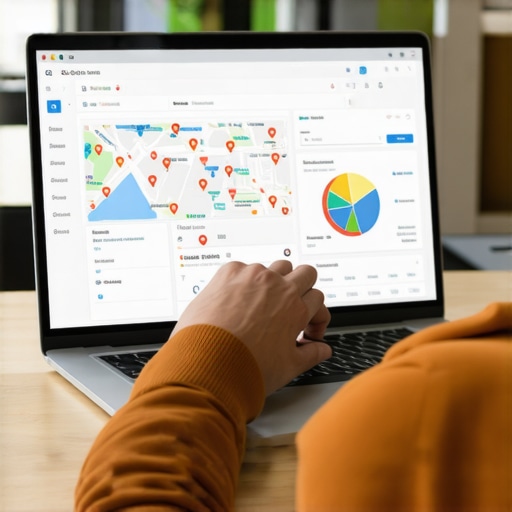
Image of a person analyzing local SEO analytics on multiple screens, depicting tools used for maintenance and strategy tracking. Alt: Person reviewing local SEO data and tools for map pack success. Title: Optimizing Local Map Visibility with Essential Tools.
Throughout my journey, one thing became crystal clear: the battle for local map pack dominance isn’t fought on surface-level tactics anymore. The lessons I’ve learned in 2026 stress the importance of embracing deep behavioral signals and real engagement, rather than relying solely on reviews or outdated SEO tricks. The most successful businesses I encountered recognized early that continuous adaptation and understanding nuanced signals make all the difference, transforming their local presence from ghostly invisibility to prime visibility.
What Surprised Me About Signals That Truly Move the Needle
One of the biggest revelations was realizing how critical after-hours interactions are. It’s tempting to focus on daytime metrics, but recent shifts reveal that when your customers engage with your profile late at night, Google actually perceives this as ongoing relevance. I found that tailoring my engagement strategies to capture these signals—like night-time review prompts—was a game-changer, and I now advocate for a 24/7 approach.
Another insight was the deep role of voice search and local behavior patterns. Tools that analyze local search trends revealed spikes in certain keywords during specific times, guiding me to optimize for those periods. The takeaway? Don’t guess—use data-driven tactics to align your profile with real-world habits, ensuring your visibility follows your customers’ natural search rhythms.
My Toolkit for Staying Ahead in the Map Pack Race
Over the years, I’ve trusted some tools that continually prove their value. Effective GMB boost services help maintain active engagement and monitor real-time signals. BrightLocal and Whitespark are my go-to for in-depth analytics, revealing engagement patterns that I might overlook otherwise. These tools empower me to pivot quickly, keeping my local presence resilient against algorithm shifts and competitors’ tactics.
Additionally, I rely on citation management platforms like Moz Local to ensure NAP consistency. Regular audits prevent drop-offs in trust signals, especially important given Google’s focus on data accuracy in 2026. The key is not just having these tools but actively leveraging their insights to refine your ongoing strategy.
Time for Action: Embrace Change and Thrive
The future of local map visibility is bright for those ready to evolve. It starts with recognizing that real engagement during all hours signals authority and relevance. With the right tools, data-driven insights, and a proactive mindset, you can push past old limitations and secure your spot in the top local map pack.
Are you prepared to retool your strategy for the new 2026 signals and transform your local presence? Now’s the moment to act—your competitors are already on this path, and fortune favors the prepared.
What specific challenge do you face in boosting your map pack visibility? Share your experiences below and let’s learn together!