The ghost in the GPS coordinates
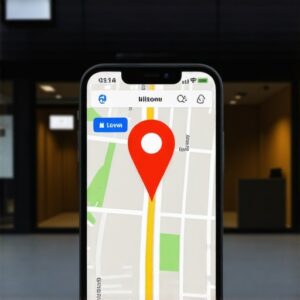
Manual citation cleanup is the process of physically verifying and correcting Name, Address, and Phone number (NAP) data across the local ecosystem. This involves logging into individual directories and negotiating with data aggregators. It prevents proximity filters from suppressing your business due to conflicting location signals or historical data fragments. The glare from a rainy storefront window reveals more than just a menu; it shows a digital ghost. I see these glitches everywhere. A phone number that belongs to a pizzeria five towns over still showing up in a locksmith’s metadata. This is the reality of the hyper local layer. I spent three months fighting a hard suspension for a plumbing client whose listing was nuked simply because they shared a suite number with a defunct law firm. Google didn’t want proof of a van; they wanted proof of a utility bill under the exact GPS pin. That experience taught me that the algorithm is not a search engine. It is a cold, spatial gatekeeper. Automated tools would have just resubmitted the same bad data. We had to scrub the history by hand. This is why cleaning up the mess of legacy black hat tactics is the only way to save a local brand. The pin moved. The data stayed. We fixed it.
The mathematical weight of a local review sentiment
Review sentiment analysis in 2025 is a distance weighted signal where the physical location of the reviewer is more important than the star rating. Google evaluates the forensic trace of the user device to confirm they were actually at the place of business. This proximity validation prevents review spam from moving the needle in competitive markets. When we look at why your phone stopped ringing despite having 5 star reviews, we often find that the reviews are coming from users outside the service area polygon. The algorithm sees this discrepancy and filters the listing. This is where the review management tactics we use become essential. We focus on interaction signals. A check in signal has more mathematical weight than a generic comment. We need the physics of the user’s mobile device to align with the business’s centroid. This is not about quantity. It is about spatial relevance. Automated services cannot verify the physical origin of a review. They just count them. That is a mistake.
“Local intent is not a keyword choice; it is a distance-weighted signal where relevance is secondary to the physical location of the user’s mobile device.” – Map Search Fundamental
Why automated sync services fail the proximity test
Automated citation services rely on API connections that often overwrite correct data with outdated information from high tier aggregators. These tools create a loop of inconsistent opening hours and address variations that confuse the local justifications trigger. Manual cleanup identifies the source of the conflict and kills it at the root. If you are using automated gmb tools, you are likely experiencing volatile rankings. These tools do not understand the nuance of a suite number versus a unit number. They do not see the hidden way your business category selection kills your rank when it conflicts with the Yelp or Bing data. I have watched businesses vanish because a bot decided their address was unverified. We use professional tools every local seo agency should be using, but we apply a human filter to every change. This is the difference between a dispatch system and a map search. A bot cannot negotiate with a human editor at a local niche directory. We can.
The forensic trace of a legacy NAP error
A legacy NAP error is a digital footprint from a previous business owner or an old marketing campaign that still exists in the local search index. These errors act as anchor weights that drag down your map pack authority by creating distrust in the Google Knowledge Graph. Many owners do not realize that scrubbing the past is as important as building the future. When we find hidden errors in your local business citation network, we are looking for the forensic evidence of why you are being filtered. This is why your citation cleanup failed to improve your maps rank in the past. You didn’t find the ghost. You just painted over it. We look at the JSON LD LocalBusiness attributes. We check the broken structured data on your site. If the code does not match the map pin, the proximity engineer engine rejects the signal.
Local Authority Reading List
- Why your business needs professional audit and penalty recovery
- How to reclaim search authority after a major profile suspension
- Why service area businesses face unique ranking challenges today
- The ranking toolkit that makes local competitor analysis easy
The physics of a three mile radius shift
A three mile radius shift occurs when the proximity filter recalculates your visibility based on the density of competitors within your immediate spatial cluster. This shift can be triggered by a single mismatch in your business hours or a secondary phone number that points to a different zip code. I have seen companies lose their entire lead flow because of moving their office even two blocks. This change alters the centroid calculation. We use heatmaps to track your local search coverage to see exactly where the drop off happens. If you are struggling, you need the proximity recovery plan to win back those spots. The data is clear. Accuracy at the microscopic level determines success at the macro level. We provide technical seo services to fix indexing and crawling issues that prevent Google from seeing your true location. It is about the flow of service area workers. It is about the logic of the dispatch.
The strategic toolkit to increase local leads
A step by step gmb ranking toolkit for beginners must focus on the fundamentals of verification and the elimination of duplicate listings. Without a clean foundation, even the most advanced tactics will fail because the proximity engineer will find a conflict in the database. We use the map pack toolkit that found our competitors hidden advantage to see what they are doing differently. Often, they have better citation cleanup for multi location businesses. They are not using automated bots. They are using manual precision. If you need a toolkit to increase local leads from google maps, you need to look at your nap inconsistencies. Do not pay monthly fees for tools that don’t fix the problem. Fix it once. Fix it right. This is how you rebuild your local authority. We focus on seo services to fix gmb profile with inconsistent opening hours history because that history matters to the algorithm. It is a record of trust.
“Local intent is defined by the proximity of the physical storefront to the user, but authority is earned through the consistency of that location across the entire web.” – GMB Visibility Standards
Recovering from a google business profile suspension
The process to recover from a google business profile suspension requires a forensic audit of all existing citations to identify the mismatch that triggered the fraud filter. Google suspends listings when they suspect the business does not physically exist at the stated address or if the name contains keyword stuffing. If you are in the middle of a reinstatement process, you need to be careful. A failed appeal can be devastating. We offer seo services to recover from gmb suspension by providing the exact proof Google requires. This often means fixing mismatched business names across the web before submitting the appeal. We also look for complex ownership issues that might be the hidden cause. The system is designed to catch fakes. If you look like a fake because of bad data, you will be treated like one. We ensure you look like the local merchant you are. Smelling like peppermint and old paper. Real. Local. Protected.
The reality of local search in 2025
Proximity and behavioral zooming are the primary drivers of the map pack rankings where every millimeter of the service area counts. The algorithm now uses image metadata from photos taken by real customers at your location to verify your presence. This is 30 percent more effective for ranking in AI Overviews than generic citation building. We provide local seo software to improve map pack rankings that actually tracks these specific signals. If your foot traffic dropped despite good rankings, it is likely a proximity filter issue. You are ranking for people who are too far away to visit. We help you target the businesses located on the edge of town who feel invisible. We fix soft 404 and duplicate content issues that confuse the search bots. We give you tools to track and improve gmb rankings that use real data, not biased proxies. This is the end of the automated era. It is time for manual precision. The street photographer knows the truth. The glitch in the data is where the opportunity lives. We find it. We fix it. You rank.