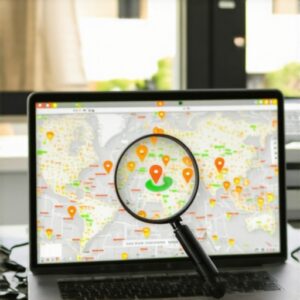
The smell of wet concrete after a morning rain always reminds me of the physical reality behind a digital map. I have spent two decades as a Map-Spam Investigator, looking for the glitches in storefront data that tell the real story of a business. My office is a collection of spatial data points and GPS coordinate salience reports because in the local search layer, a business is simply a Proximity Beacon. When that beacon starts flickering because of toxic directory spam, the phone stops ringing. I once spent three months fighting a hard suspension for a plumbing client whose listing was nuked simply because they shared a suite number with a defunct law firm. Google did not want proof of a van; they wanted proof of a utility bill under the exact GPS pin, and they wanted the toxic link profile cleaned before they would even consider a manual review.
The ghost in the GPS coordinates
Directory spam consists of low-quality, automated entries in obscure databases that confuse search engine crawlers regarding your physical location. These ghost listings create a digital noise that masks your true proximity, leading to a ranking drop in the Google Map Pack. If your business profile is attached to hundreds of low-tier directories with mismatched addresses, your trust score collapses. I see this often when agencies sell citation blasts that end up on domains with no traffic and high spam scores. You need to identify these errors using the audit strategy for uncovering ghost listings to ensure your data remains clean. This is not just about links; it is about the mathematical weight of your location in a spatial database. Every mismatched character in your business name across these sites acts like a lead weight on your visibility.
“Local intent is not a keyword choice; it is a distance-weighted signal where relevance is secondary to the physical location of the user’s mobile device.” – Map Search Fundamental
Why your physical address is a liability
Physical address consistency is the primary trust signal for local search algorithms, and any inconsistency in directory listings can turn your business location into a ranking liability. When your address appears differently on a dozen sites, the search engine cannot verify your centroid with 100 percent certainty. This uncertainty is why hiding your address often makes your map rankings disappear completely. I have seen businesses move two blocks and lose half their traffic because the old directory links were still pointing to the previous GPS coordinates. The algorithm views this as a potential fraud signal. It is essential to engage in cleaning up local data before you try to scale your advertising. A single mismatched phone number in a secondary verification tier can kill your organic trust score overnight. You are not just building links; you are validating a physical presence in a world that increasingly relies on automated verification loops.
Local Authority Reading List
The three mile radius that determines your revenue
Proximity tracking is the only metric that matters for maps visibility because Google limits your organic reach based on a three mile radius from your verified address. If your backlink profile is cluttered with low-quality directory spam, this radius shrinks as the algorithm loses confidence in your proximity data. I use proximity tracking to see how the search results shift street by street. When we find that a client is ranking on 5th Street but invisible on 8th Street, we usually find a cluster of bad links with the wrong zip code. You must understand that your seo audit needs to focus on Google Maps proximity rather than just traditional domain authority. The math of a check-in signal or the forensic trace of a service area polygon carries more weight than a link from a generic blog. We are looking for spatial salience, which is the degree to which your business dominates the local coordinate grid. If your directory links are pointing to a virtual office or a coworking space, you are essentially telling the algorithm that you do not exist in the physical world, which leads to ranking issues caused by virtual offices that are difficult to fix.
How to spot a manual search penalty before it ruins your business
Manual search penalties often manifest as a sudden disappearance from the Map Pack while your website remains in the organic search results. This ranking drop is usually triggered by mass review removal or toxic link patterns discovered by the Google spam team. You can spot a manual search penalty by checking your impression data in the GMB dashboard. If the line drops to zero while your category search volume is steady, you are in the penalty box. This is when you need services to restore trust signals by pruning the bad links and submitting a clean reinstatement appeal. Many owners panic and try to get more reviews, but your business profile needs more than just five star reviews to recover. You need clean data and a history of consistent NAP information. The algorithm looks for the forensic signature of an established business. If it sees a sudden surge of directory listings from automated tools, it marks your profile as a high-risk entity. This is why automated gmb tools often cause more harm than good when you are trying to build long-term authority.
The link cleanup move
Link cleanup involves the manual removal of toxic directory entries and the disavowal of spammy domains that use over optimized anchor text. If your anchor text is 100 percent your primary keyword, the algorithm will flag it as manipulative. I recommend using the link cleanup move to shift your profile toward branded and naked URL anchors. This restores the natural look of your profile. When we find bad links vs good citations, we prioritize removing those that link to old addresses. This is especially vital if you have experienced ranking loss after an address change. The cleanup process is tedious; it requires contacting webmasters and using the Google Disavow Tool for the remainder. However, citation cleanup actually moves the needle on map rankings faster than almost any other tactic. It removes the friction from the proximity calculation, allowing your profile to shine through the digital fog of spam.
Reclaiming search authority after a major profile suspension
Reclaiming search authority requires a systematic audit of your business data to ensure all trust signals are re-established after a Google Business Profile suspension. You must first reclaim search authority by fixing the technical errors that caused the trigger in the first place. Whether it was a simple schema error or a complex ownership issue, the recovery path is the same. You need to show Google that you are a legitimate local entity. This involves using the audit protocol for ranking drops to identify every single vulnerability. In the world of local search, there are no shortcuts. You are building a reputation street by street, link by link. The data shows that 2026 AI Overviews will favor businesses with strong, clean, physical signals. Those who invest in manual citation cleanup today will be the ones who dominate the local ecosystem for years to come. Stop looking for a magic toolkit and start looking at your map data like a cartographer. Accuracy is your only real currency.