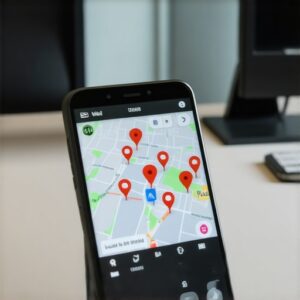
I walk through city streets and notice the glitches. The storefronts that do not exist, the signs that were never hung, and the digital signals that smell like wet concrete after a storm. I spent twenty years hunting map spam. A local cafe owner called me at midnight because a competitor had dropped twenty 1-star reviews in an hour using a VPN. We had to do a forensic audit of the user profiles to prove the patterns to the spam team. It was not just about the text; it was the timing, the lack of GPS check-ins, and the suspicious account age of every reviewer. This is the reality of the local search ecosystem today. It is a battlefield of proximity and trust.
The forensic signature of a fake review burst
Detecting fake reviews requires analyzing timing, reviewer history, and technical metadata like IP proximity or account velocity. If a business receives a sudden influx of negative sentiment from accounts that have never posted before, it indicates a coordinated attack. You can use competitor spam removal tactics to identify these clusters. We look for patterns where reviewers have left reviews for the same set of businesses in different cities. This indicates a review farm at work. The math of local trust is fragile. When a competitor uses bot nets, they leave a digital trail that Google algorithms eventually catch, but the immediate damage to a small business can be catastrophic. Proving these patterns to Google support is a grueling process that requires documentation of every anomaly. If your leads have vanished, you might need to investigate why your phone stopped ringing despite having a history of high ratings. The glitch is often deeper than a few bad words.
“Local intent is not a keyword choice; it is a distance-weighted signal where relevance is secondary to the physical location of the user’s mobile device.” – Map Search Fundamental
Why your proximity ranking collapsed overnight
A proximity ranking drop usually stems from a change in the physical centroid of your service area or a filter update that favors narrower radius targets. If you suddenly find your business pushed to the second page of maps, it might be due to the Vicinity update logic. We often see proximity filter updates that penalize businesses for having an address too far from the city center. This is a mathematical shift in how Google calculates salience. The algorithm looks at the density of competing pins and the strength of your local authority signals. When your rankings dip, it is rarely a coincidence. It is a recalculation of your beacon’s strength. I have seen companies lose everything because they moved their office two blocks away, crossing an invisible algorithmic boundary. You can explore the impact of moving your office on map rankings to understand this phenomenon. The pin is the heart of your revenue.
The math behind local justification triggers
Google justifications are triggered by matching user search queries with specific keywords found in reviews, website content, and profile descriptions. These justifications appear as small snippets under your map listing, like “Their website mentions luxury plumbing.” These are not random. They are the result of a dense semantic web you build through interaction signals that boost maps ranking. If you want to dominate a specific neighborhood, you need to ensure your reviews mention the neighborhood by name. This creates a spatial anchor. The algorithm reads the sentiment and the entities. It knows if a customer is real based on the duration their phone stayed at your coordinates. This behavioral data is the gold standard of 2025 local SEO. If you are struggling, using local seo services to recover from proximity drops can help realign these triggers.
How to scrub a toxic profile back to health
Scrubbing a profile involves removing keyword stuffing from business names, deleting duplicate listings, and pruning low quality directory links. Many businesses fall victim to old school agencies that used black hat tactics. You must use scrubbing away legacy black hat footprints to clean up the mess. If your business name contains ten keywords that are not on your legal registration, you are a target for suspension. Google has become aggressive. They want to see a clean, human-readable profile. We find that fixing keyword stuffed descriptions is the first step toward regaining algorithmic trust. The footprint of a spammer is easy to see once you know the signs. It looks like a grid of fake addresses and virtual offices. It feels synthetic. To fix it, you need to be authentic.
Local Authority Reading List
- Dominating Local Maps in 2025
- Finding Phantom Listings Hurting Your Rank
- Reinstatement Success After Listing Failure
- The Toolkit for Agency Data
The phantom listing problem in the citation network
Phantom listings are old, incorrect, or duplicate business mentions that confuse search engines about your actual location and phone number. These citations are the backbone of local power, yet they are often the most neglected. If you have moved five times in ten years, your digital trail is a disaster. You must audit your citations to find these ghosts. Google cross-references your profile with these third party sites. If the data does not match, your trust score drops. We see this constantly with businesses that used automated tools. Those tools often fail to update the deep web of local directories. That is why manual citation cleanup is the only way to ensure 100 percent accuracy. One wrong digit in a phone number can kill your lead flow. It is like a short circuit in a dispatch system.
A toolkit for high stakes profile management
Effective management tools must provide proximity heatmaps, review sentiment analysis, and real time monitoring of competitor listing changes. Agencies often rely on generic SEO tools that fail in the hyper local layer. You need professional tools for local seo agencies that show exactly where your ranking drops off. Is it at the three mile mark? Or does it happen as soon as you cross the river? This level of detail allows for strategic ad spend and service area adjustments. Using a map pack toolkit gives you the upper hand against national chains. They have the budget, but you have the local data. You know the streets. You know which corner has the most foot traffic. The digital map should reflect that physical reality.
“Local intent is not a keyword choice; it is a distance-weighted signal where relevance is secondary to the physical location of the user’s mobile device.” – Map Search Fundamental
The logistics of a successful reinstatement appeal
Winning a reinstatement appeal requires a utility bill, a business license, and a video walk through of your physical storefront. When a listing is nuked, panic sets in. I saw a plumber lose his listing because he shared a suite number with a defunct firm. We had to prove the van was real. You need gmb profile reinstatement services to navigate the bureaucratic loop. Google does not care about your feelings; they care about verification. If you are a service area business, you must follow the recovery roadmap for suspended profiles. Do not delete the listing and start over. That is a fatal mistake. You will lose all your reviews and history. You must fight for the original pin. The data has a memory.
Fixing the structural errors in your local schema
Schema errors occur when the structured data on your website contradicts the information on your Google Business Profile. This is a technical glitch that many ignore. You must use seo services to fix schema errors to align your JSON-LD with your NAP data. If your website says you are open until 6 PM but your profile says 5 PM, Google will hedge its bets by not showing you to users. It is about consistency across all layers. These inconsistent store hours are a silent killer. The AI overview looks for definitive answers. If your data is fragmented, you are invisible. I have fixed profiles where a single comma in the address schema was the reason for a ranking plateau. The machine needs precision. Give it the exact coordinates. Clean the lens. See the map for what it really is. A database of reality. [{“@context”:”https://schema.org”,”@type”:”FAQPage”,”mainEntity”:[{“@context”:”https://schema.org”,”@type”:”Question”,”name”:”How can I identify fake reviews on my profile?”,”acceptedAnswer”:{“@context”:”https://schema.org”,”@type”:”Answer”,”text”:”Look for patterns in reviewer history, such as accounts that review unrelated businesses across various cities, a sudden burst of reviews in a short timeframe, and a lack of specific details about the service provided.”}},{“@context”:”https://schema.org”,”@type”:”Question”,”name”:”What should I do if my Google Business Profile is suspended?”,”acceptedAnswer”:{“@context”:”https://schema.org”,”@type”:”Answer”,”text”:”Collect official documents such as your business license and utility bills, then submit a formal reinstatement appeal without creating a new listing, which would cause you to lose your existing reviews and authority.”}},{“@context”:”https://schema.org”,”@type”:”Question”,”name”:”Why did my business disappear from the Map Pack?”,”acceptedAnswer”:{“@context”:”https://schema.org”,”@type”:”Answer”,”text”:”Common reasons include proximity filter updates, inconsistent NAP data across citations, or a technical suspension caused by keyword stuffing in your business name.”}}]}]