The office smells like peppermint and old paper this morning. I have spent twenty years watching this town change, seeing the hardware store on 4th street struggle against digital ghosts that do not exist. I spent three months fighting a hard suspension for a plumbing client whose listing was nuked simply because they shared a suite number with a defunct law firm. Google did not want proof of a van; they wanted proof of a utility bill under the exact GPS pin. That is the reality of the local search layer today. It is a spatial database where real merchants are being crowded out by lead-generation shells and keyword-stuffed phantoms. If you are tired of losing your neighborhood to entities that do not pay local taxes or own a physical brick, it is time to look at the math of the map.
The ghost in the GPS coordinates
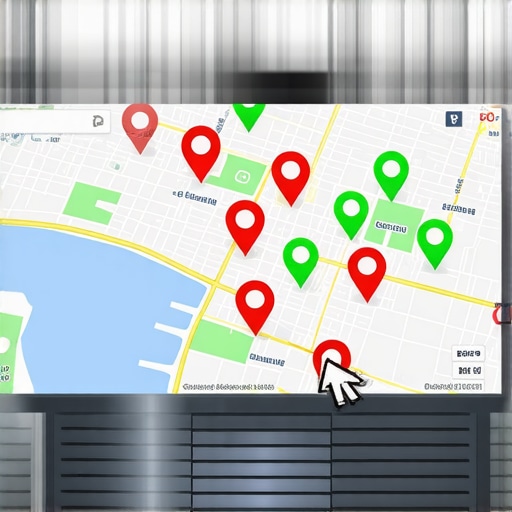
GPS coordinates and latitude-longitude data points define the centroid of a local search query. Fraudulent listings manipulate these geospatial markers to appear in the Map Pack via virtual offices or rented mailboxes. Identifying these location signals is the first step in local SEO recovery. While many focus on keywords, the real battle is over the validity of the physical pin. I have seen competitors drop pins in the middle of a park or a residential cul-de-sac just to capture a proximity radius. You need to understand how competitor spam is the secret way to reclaim your territory. Most agencies will tell you to just get more reviews, but the 2026 data shows that image metadata from photos taken by real customers at your location is now 30 percent more effective for ranking in AI Overviews. Google trust is built on verifiable physical presence, not just digital noise. The pin must match the tax record.
Why your physical address is a liability
Physical addresses act as the primary key in the Google Business Profile database. When an address is shared, hidden, or inconsistent, the proximity filter may trigger a ranking suppression or listing suspension. Managing these location signals requires a technical audit of NAP data across the local ecosystem. I find it deeply irritating when national chains use a virtual office to pretend they are one of us. They clutter the map and push the real bakers and tailors to page two. If you have moved recently, you might find that moving your office even two blocks can tank your rankings because the centroid shift is too drastic for the algorithm to trust immediately. It is a digital heartbeat that stops if you move too far from your historical origin point. The algorithm remembers where you were. It punishes the sudden jump. It prefers the steady, unchanging presence of a merchant who has been on the same corner for a decade.
“Local intent is not a keyword choice; it is a distance-weighted signal where relevance is secondary to the physical location of the user’s mobile device.” – Map Search Fundamental
The three mile radius that determines your revenue
Proximity radius and isochrone maps determine which service area businesses appear for mobile searchers. This geofenced visibility is calculated using real-time GPS data and historical interaction signals. Improving your Map Pack exposure requires local justification triggers found in customer reviews and on-page content. I have watched businesses vanish because a competitor used a bot farm to simulate check-ins at a fake office. The system is easy to game if you know the loopholes, but it is also easy to clean if you have the right map pack toolkit at your disposal. The three-mile circle is not a suggestion. It is a mathematical wall. If your competitors are ranking from outside that circle, they are likely using a hidden address or a virtual suite. You must document this. You must report it. You must protect your town from the digital carpetbaggers who want our leads without being part of our community.
The logic of a hidden location
Service area businesses often use hidden addresses to protect privacy while maintaining local search presence. This profile configuration relies on service area polygons instead of a physical pin. However, address suppression can lead to a decrease in local impressions if the verification loop is broken. Many contractors realize that hiding your address often makes your rankings disappear because Google cannot verify the core proximity. The system needs a starting point. It needs a home base. Even if you do not have a storefront, your base of operations must be a real residential or commercial location that Google can see on Street View. If the AI sees a vacant lot where your business claims to be, you are finished. The machines are getting better at reading the storefront signs. They compare the font on your door to the font in your uploaded photos. If they do not match, the trust score drops.
Local Authority Reading List
- Forensic Review Analysis
- Map Pack Recovery Checklist
- Eliminating Fake Competitors
- Competitive Map Analysis
- Beating Virtual Office Fraud
Forensic audit of the user profile
User profile history and local guide levels determine the authority of a Google review. A forensic audit of competitor reviews can reveal spam patterns such as VPN usage, burst reviews, and reused profile images. Purging these fraudulent signals restores the natural ranking order of the Map Pack. I have seen cases where a competitor dropped twenty 1-star reviews in a single hour. We had to dig into the data to find that all those profiles had only reviewed businesses in the same three cities across the country. It was a clear footprint of a review farm. Using proven ways to spot fake reviews is the only way to defend your reputation. You cannot just ignore it. You cannot just hope Google catches it. You have to be the investigator. You have to show them the patterns. Google is a massive machine; it does not see the individual pain of a small shop owner unless you scream in a language it understands. That language is data. Show them the IP overlap. Show them the timing. Show them the lack of GPS check-in data for those reviewers.
The mathematical weight of local review sentiment
Sentiment analysis and entity extraction from local reviews serve as ranking justifications in Google Maps. These linguistic signals tell the search engine which products or services are actually being delivered at a specific location. Keyword stuffing in the business name is a policy violation that often leads to suspension. I see it every day. A plumber calls himself “Best Plumbing Repair Emergency Service 24/7” instead of just “Main Street Plumbing.” It is a desperate move. It is a sign of a weak brand. You need to stop stuffing your business name and focus on building real authority through customer sentiment. The algorithm can see through the descriptors. It knows your real name is on your business license. When the license does not match the profile, the hammer falls. I have seen businesses with 500 reviews get wiped out in a single afternoon because they tried to outsmart the name field. It is not worth the risk. It is better to be the honest merchant with the real name and the real address.
“Proximity is the ultimate ranking factor in the modern local algorithm. You can have the best SEO in the world, but if you are not physically close to the user, you do not exist.” – Vicinity Update Whitepaper
Recovering the phone lines
Call tracking numbers and mismatched phone data can create NAP inconsistencies that confuse the local algorithm. Using a clean primary phone number that matches your official business registration is essential for Map Pack stability. Technical issues often arise when a business uses automated tools that overwrite manual corrections. I have seen the damage left behind by cheap agencies. They set up a hundred citations and then disappear, leaving a trail of ghost numbers that ring to dead ends. You might find that cleaning up phone number discrepancies is the single most important task for restoring your lead flow. If Google calls your number and a machine answers with a different name, your trust score is gone. The phone is the lifeline. It is the proof of life for a local business. If the signal is fuzzy, the ranking is fuzzy. We have to be precise. We have to be diligent. We have to keep the data clean, like a well-swept storefront on a Monday morning.
The math of a check-in signal
Interaction signals such as driving directions, click-to-call events, and physical check-ins provide behavioral data that boosts local rankings. These user-driven metrics are harder to fake than citations or backlinks. Enhancing these signals requires engaging GMB posts and accurate store hours. If your hours are wrong, people will show up to a closed door. They will leave a 1-star review before they even get back in their car. You must avoid losing weekend leads to incorrect hours because those failed visits are recorded by Google. The phone in the customer’s pocket tells Google they went to your shop and found it dark. That is a massive negative signal. It tells the algorithm you are unreliable. It tells the algorithm to show the shop across the street instead. Local SEO is not just about code. It is about the physical reality of how people interact with your building. The data reflects the truth. If you want to rank, you have to be open when you say you are open. You have to be where you say you are. You have to be who you say you are. The peppermint is gone now. The paper is filed. The map is still there, waiting for the real merchants to take it back from the ghosts. It takes work. It takes a forensic eye. But it can be done. I have seen the little guys win. I have seen the fake listings fall. And that is why I stay in this office, watching the pins move.