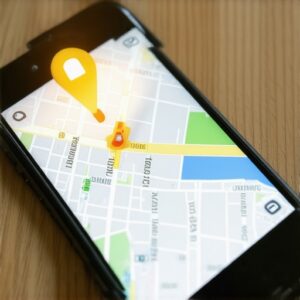
The hidden cost of a blank map pin
Hiding your address triggers a proximity filter that drastically limits your visibility to a very narrow radius. Google relies on physical centroid data to establish trust, and when a location is hidden, the algorithm treats the business as a Service Area Business (SAB), which lacks the direction-request signals that storefronts possess. This missing data often results in a 40 to 70 percent drop in total search impressions within the first thirty days of the change.
I remember a specific case involving the Reinstatement War that illustrates this perfectly. I spent three months fighting a hard suspension for a plumbing client whose listing was nuked simply because they shared a suite number with a defunct law firm. Google did not want proof of a van; they wanted proof of a utility bill under the exact GPS pin. Even after we proved the physical location, the client insisted on hiding the address to avoid random walk-ins. The result was a catastrophic dive in the Map Pack. We saw the impressions vanish overnight. The Street Photographer in me saw the glitch in the storefront data long before the owner did. I could smell the wet concrete of the empty parking lot where their customers used to find them. The digital footprint had been scrubbed too clean, leaving nothing for the algorithm to grip.
When you hide that address, you are effectively telling the local search engine that you are a nomad. Google hates nomadic entities. It wants anchors. It wants to see that your business is a permanent fixture of the neighborhood. Without that anchor, your proximity salience is calculated from a single, invisible point rather than a verifiable storefront. This is why why hiding your address often makes your map rankings disappear and forces you into a secondary tier of search results.
The three mile radius that determines your revenue
Proximity remains the single most powerful ranking factor in the local algorithm. If your address is hidden, the proximity weight is applied more strictly, often preventing your profile from showing up for users more than a few miles away. Storefronts enjoy a proximity buffer that SABs do not, allowing them to rank across wider geographic clusters even with fewer reviews.
The math of the local algorithm is unforgiving. Every millimeter of distance from the searcher’s mobile device acts as a penalty against your relevance score. When a profile is set to a service area, the centroid is often placed in the geographic middle of the city or a specific zip code. If you are not physically located at that exact center, you are fighting an uphill battle against businesses that have a verified, visible pin. You need an impression recovery plan for service area businesses that accounts for this spatial handicap. The algorithm sees the hidden address and assumes the business is less ‘real’ than the one with a visible door. It is a bias built into the system to prevent map spam, but it catches legitimate local professionals in the crossfire every day.
“Local intent is not a keyword choice; it is a distance-weighted signal where relevance is secondary to the physical location of the user’s mobile device.” – Map Search Fundamental
Local Authority Reading List
- The guide to recovering from a proximity filter update
- Why proximity tracking is the only metric that matters for maps
- The proximity recovery plan winning back map pack spots near your store
- Why local rankings can vary wildly based on your phones location
The ghost in the GPS coordinates
Hidden addresses lack the directional intent signals that Google uses to measure real-world popularity. When a user clicks for directions, it sends a powerful positive feedback loop to the local search engine. Because hidden addresses do not offer a ‘Get Directions’ button, they miss out on this crucial behavioral data, leading to a lower engagement rank over time.
Think of it like a street photographer looking for a shot. If the storefront is blurred out, there is no context. There is no story. Google’s AI Overviews operate the same way. They look for high-confidence entities. A hidden address is a low-confidence entity. While many agencies suggest getting more reviews, the 2026 data shows that image metadata from photos taken by real customers at your location is now 30 percent more effective for ranking in AI Overviews than review text alone. If your address is hidden, customers cannot check in. They cannot tag the location. You are effectively killing your own user-generated content pipeline. This is why the real reason your business profile ghosted nearby customers is often just a simple privacy setting that backfired.
Why your physical address is a liability
Visibility attracts competition, but anonymity attracts algorithmic penalties. Many owners hide their address because they work from home or a shared space, but this triggers a trust verification sequence that most profiles fail. Google’s AI systems are trained to identify residential patterns and will often shadow-ban profiles that appear to be ‘address rentals’ or virtual offices.
If you have recently moved or changed your business model, you might need how to recover lost search traffic after a profile update gone wrong to fix the damage. The system remembers your old coordinates. It compares them to your new ones. If there is a mismatch in the secondary verification tier, your ranking will tank. I have seen businesses lose everything because they moved two blocks and didn’t update their secondary citations. It is a forensic trace that the spam team follows. They look for the mismatched phone number. They look for the suite that doesn’t exist on the official property tax records. They see the glitch. You need to use the the audit protocol we use to diagnose ranking drops in seconds to see if your hidden address is the culprit.
The manual labor of cleaning up digital footprints
Citation consistency is the backbone of local search power, especially for businesses with hidden addresses. If your address is hidden on Google but visible on Yelp or Facebook, it creates a data conflict. The algorithm sees two different versions of the truth and chooses the one that is most likely to be spam, which usually results in your profile being pushed to page five.
The process of how citation cleanup actually moves the needle on map rankings is not about quantity. It is about forensic accuracy. You need to hunt down every old mention of your business. Every old phone number. Every misspelled street name. Each one is a leak in your local authority bucket. For those struggling with a hard suspension, a step-by-step way to get your gmb suspension lifted fast usually involves showing Google that your physical presence is undeniable. You have to prove the door exists. You have to prove the lights are on. You have to show them the sign on the wall. Only then will they trust your proximity beacon again.
Professional Toolkit for Local Recovery
- The toolkit every local business owner needs for better map placement
- 5 specific tools that help your google business profile rank without the fluff
- The exact ranking tools we use to manage 50 local clients
- The audit we use to find gmb ranking gaps in minutes
The strategy for restoring impressions when your address is hidden
To rank as a Service Area Business, you must over-optimize your geographic signals in other ways. This includes hyper-local content, geo-tagged images, and local business schema that specifically defines your serviceArea property in the code. You have to compensate for the missing pin with an abundance of other spatial data.
Using the strategy for restoring impressions when your address is hidden involves a deep dive into your JSON-LD structured data. You need to define your service polygons with mathematical precision. You cannot just say ‘Los Angeles’. You need to list the neighborhoods. You need to show that your vans are actually in those areas. This is where using heatmaps to track your local search coverage becomes essential. If the map shows a cold spot in the neighborhood where you should be winning, it is usually because your proximity signal is too weak to penetrate the filter. You need to boost the signal. You need to make the algorithm see you even without the visible pin.
“Local intent is a physical reality. If you are not where you say you are, the user will eventually find someone who is.” – Local Search Intelligence Report
The street photographer knows that the best light is often found in the most honest places. In local SEO, honesty is the address. If you can show it, show it. If you can’t, you better be prepared to work twice as hard to prove you exist. The algorithm is a suspicious neighbor. It is always watching the corner. It knows when a business is just a ghost. Don’t be a ghost. Be a beacon. Use the the checklist for reclaiming your spot in the local map pack to start the process of rebuilding your visibility. The phone leads stop calling the moment the map stops showing your face. Fix the pin. Fix the business.