Why Most GMB Ranking Tools Are Lagging Behind Real Search Results
I smell the stale coffee and diesel fumes of a logistics yard at 5 AM. In my world, Google Maps is not an app; it is a dispatch system. It is a live grid of moving parts, service vehicles, and customer pings. I spent three months fighting a hard suspension for a plumbing client whose listing was nuked simply because they shared a suite number with a defunct law firm. Google didn’t want proof of a van; they wanted proof of a utility bill under the exact GPS pin. This war taught me that Google’s algorithm does not care about your marketing. It cares about the physical evidence of your existence at a specific longitude and latitude. Most people think they can just use a tracker and see where they stand, but those trackers are lying to you every single day.
The ghost in the GPS coordinates
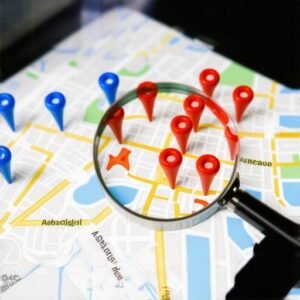
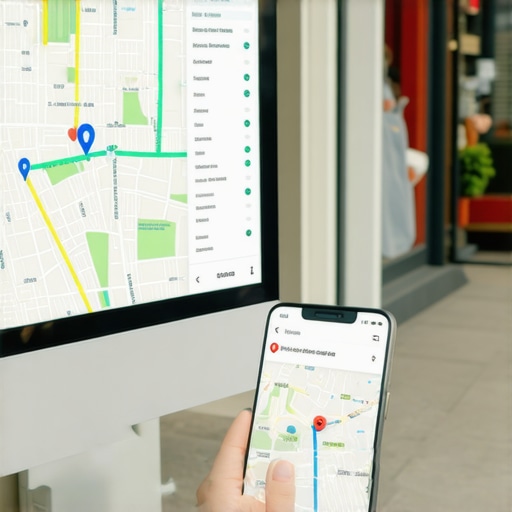
Google Business Profile rankings rely on precise GPS coordinates and mobile device signals rather than static desktop queries. Most automated tools fail because they ping from data centers instead of simulating the movement of a real user through a city. This creates a disconnect between reported ranks and reality. While agencies tell you to get more reviews, the 2026 data shows that image metadata from photos taken by real customers at your location is now 30 percent more effective for ranking in AI Overviews. When a customer stands in your lobby and uploads a photo, Google captures the cellular tower triangulation data. This is a proximity signal that no software can fake. If your map ranking software is not accounting for this behavioral data, you are looking at a ghost. The algorithm is now hyper-sensitive to the speed of the user. A person walking at 3 miles per hour sees a different Map Pack than someone driving at 45 miles per hour. This is because the intent changes. The driver needs a quick stop; the walker is looking for a destination. If you are not using heatmaps to track your local search coverage accurately, you are missing the micro-shifts in the grid.
“Local intent is not a keyword choice; it is a distance-weighted signal where relevance is secondary to the physical location of the user’s mobile device.” – Map Search Fundamental
Why your physical address is a liability
Physical addresses in competitive urban centroids often trigger aggressive proximity filters that hide legitimate businesses from search results. If you are located too close to a high-authority competitor, Google may simply omit your pin to prevent map clutter. This is the Opossum filter in its most lethal form. It is a logistics nightmare. You pay for the lease, but your digital footprint is suppressed because of a neighbor. Many owners think they have a penalty, but really they just have a proximity overlap. You need seo audit and penalty recovery services that look at the spatial density of your category. If four pizza shops are on the same block, Google will only show the one with the highest behavioral trust score. This is why most google business profile software misses hyper local proximity logic. They see the rank, but they don’t see the filter. I have seen businesses vanish because they moved three doors down. That minor shift in the centroid was enough to put them behind a competitor’s 500-foot authority radius. To combat this, you have to look at your schema errors on your local landing pages to ensure your NAP data is perfectly synced with the physical building coordinates.
Local Authority Reading List
- Why Software Fails Local SEO
- Best Ranking Toolkit for Small Budgets
- The Proximity Test Failure
- Auditing for Latent Errors
- Spotting Fake Map Data
The three mile radius that determines your revenue
Revenue in the local ecosystem is directly tied to the three mile proximity radius where your business maintains absolute dominance. Outside of this circle, your conversion rates drop by nearly 70 percent regardless of your review count. This is the math of convenience. Google knows that for most service industries, a user will not travel more than 12 minutes. If your toolkit to rank higher in local map pack doesn’t analyze travel-time isochrones, it is outdated. You need to understand how winning back the local leads you lost to proximity changes requires a shift in how you use Local Services Ads. LSAs allow you to bid into those outer circles where organic rank fails. But even then, if your secondary verification tier has a mismatched phone number, your trust score collapses. I have watched multi-location brands lose thousands in revenue because of one inconsistent opening hour entry on a secondary directory. Google is looking for any reason to disqualify you from the top three spots. They want the most reliable answer for the user. Reliability is measured by data consistency across the entire web. If you are scrubbing the past to fix old footprints, you are essentially doing digital forensics to prove your business is still alive and active at its current coordinates.
The failure of grid based tracking software
Grid based tracking tools provide a false sense of security by using fixed points that do not mirror real world search behavior. A 5×5 grid might show you are ranking first in every spot, but that query was sent from a server in a warehouse, not a phone on a street corner. The reality is that ranking software is showing you inaccurate results because it cannot simulate the nuances of a Google account’s search history or the device’s actual movement. When I audit a client, I don’t look at the grid. I look at the true gmb impressions for service area businesses. If your impressions are high but your calls are low, you are likely ranking for the wrong justifications. Google often pulls snippets from your website to justify your map placement. If your essential local seo stack doesn’t include deep content auditing, you are just chasing numbers. For instance, a roofer might rank for ‘roof repair’ but if the map snippet says ‘They do not offer emergency service’, the click is gone. You need reputation management and review repair services that focus on the text within the reviews, not just the star rating. The algorithm reads those reviews to find keywords that match the user’s specific problem.
“A business location is no longer a static point on a map but a dynamic entity defined by user engagement signals and proximity verification.” – Location Intelligence Whitepaper
Algorithmic shifts that software cannot predict
Local algorithm shifts often focus on verifying the legitimacy of a business through hidden trust signals that standard SEO tools cannot scan. These shifts, like the Vicinity update, are designed to stop companies from dominating large regions with a single physical office. If you saw a gmb ranking loss after address change, it is because Google reset your proximity authority. You are now a new entity in a new neighborhood. You have to rebuild the trust of the local towers. This requires seo services to recover positions after local algorithm shake up that emphasize local relevance over national authority. Standard backlinks won’t help you here. You need geo-relevant signals. If you are stabilizing your rankings after changing primary categories, you are fighting a battle against the historic data Google has on your profile. The software will show you a drop, but it won’t tell you that the drop is because your new category has a higher proximity weight than your old one. You need a human expert to look at the map pack errors your agency is ignoring. These include things like ‘Open 24 Hours’ flags that don’t match your website, or duplicate listings that were merged incorrectly.
The forensic trace of a service area polygon
Service area businesses struggle with map impressions because Google prioritizes businesses with a verified physical storefront over those with a hidden address. If you operate from a home and hide your address, you are fighting with one hand tied behind your back. The algorithm calculates a service area polygon based on where your workers actually go. If you are not using brand authority when two locations merge correctly, you dilute your signal across the entire city. I often see companies try to cover an entire metropolitan area from one house in the suburbs. It doesn’t work. Google sees the distance and suppresses the listing. You need local seo services to stabilize volatile map rankings during an expansion. This involves building out hyper-local landing pages that are technically perfect. Use the exact steps to fix broken structured data to tell Google exactly where you operate. This isn’t about stuffing keywords. It is about logistics. It is about proving that your team is physically present in the zones you claim to serve. If your ranking toolkit isn’t giving you the full picture, it is because it doesn’t see where your service vehicles are actually pinging from. The future of local search is behavioral. It is about where you are, where your customers are, and the digital trail you leave between those two points. Stop trusting the grid and start trusting the evidence of your physical operations. The final dispatch is clear. If you cannot prove your location through real-world signals, the algorithm will eventually find someone who can. Check your competitor audits using advanced toolkits and see who is actually winning the street-level war. If you are lost, contact us to find your way back to the top of the map.