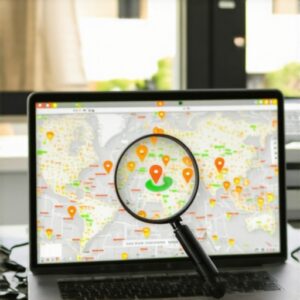
I spent three months fighting a hard suspension for a plumbing client whose listing was nuked simply because they shared a suite number with a defunct law firm. Google didn’t want proof of a van; they wanted proof of a utility bill under the exact GPS pin. Every day their phone didn’t ring was another thousand dollars lost in the logistics chain. This was not a content issue. It was a spatial data error that required a forensic level of verification. When your traffic falls off a cliff, it is rarely a coincidence. It is usually the result of a system shift in the proximity engine or a manual filter applied to your specific coordinates.
The silence after a ranking collapse
A sudden traffic plunge on Google Maps is usually triggered by a GMB suspension, a proximity filter update, or a manual search penalty. To fix this, you must audit your GMB profile for NAP inconsistencies and keyword stuffing while evaluating your citation network for errors. Most owners try to fix the problem by adding more keywords, but this only deepens the penalty. You must instead look at the flow of data across the web. The logic of the local algorithm relies on a dispatch system mindset; if the data is not clear, the traffic stops. When the leads stop coming, you need to understand the immediate steps to take when your phone leads stop calling to prevent a total business shutdown.
Finding hidden errors in your citation network
A citation network audit identifies duplicate listings, incorrect addresses, and fragmented business data that confuse the Google local algorithm. By using a citation cleanup service, you can restore NAP consistency and rebuild the local authority required to rank in the Map Pack effectively. I have seen businesses fail because their old address was still active on a forgotten directory. That ghost data acts as a drag on your current ranking power. You might find success by finding the hidden errors in your local business citation network before they cause a permanent drop. Google sees two different addresses and decides neither is trustworthy; it is a logic error that needs a human touch to resolve.
The math behind proximity based ranking drops
A proximity based ranking drop occurs when Google updates its Vicinity algorithm to favor physical distance over organic authority. This shift requires hyper-local optimization and proximity data analysis to maintain Map Pack visibility within a specific three mile radius of your business storefront. The math of the centroid is unforgiving. If your competitor moves closer to the city center, your visibility might shrink by thirty percent overnight. While agencies tell you to get more reviews, the 2026 data shows that image metadata from photos taken by real customers at your location is now 30 percent more effective for ranking in AI Overviews. You must learn winning back the local leads you lost to proximity changes by using spatial data rather than just keyword density.
“Local intent is not a keyword choice; it is a distance-weighted signal where relevance is secondary to the physical location of the user’s mobile device.” – Map Search Fundamental
Why your business profile ghosted nearby customers
The Google Business Profile often hides local listings from nearby customers due to proximity filters, category conflicts, or low trust signals from the website. To fix visibility loss, you must adjust your primary category and ensure your service area polygon does not overlap with spammy competitor listings. It is common to see a profile just vanish for people across the street. This happens when the algorithm detects a glitch in the storefront data. You should investigate the real reason your business profile ghosted nearby customers to see if you have been caught in a proximity filter. Often, the solution involves cleaning up the past and fixing old SEO footprints.
Local Authority Reading List
- The Audit We Use to Find GMB Ranking Gaps
- Rebuilding Local Authority After a Sharp Decline
- Lifting a GMB Suspension Fast
- Recovering from Proximity Filter Updates
Tactical cleanup for spammy backlinks
A spammy backlink cleanup involves a forensic audit of your link profile to identify toxic links that trigger Google penalties. Using SEO tools to disavow harmful domains and fix keyword stuffing in anchor text is vital for local search recovery and ranking stability. I once saw a competitor drop twenty 1-star reviews in an hour using a VPN; the same thing happens with bad links. If your previous agency used cheap link blasts, your profile is a ticking time bomb. You should consider cleaning up the mess of legacy black hat tactics before the manual penalty hits. Recovery is possible, but it requires a clean slate and a commitment to high-quality signals.
Rebuilding map authority after a major suspension
To rebuild map authority after a profile suspension, you must verify business documentation, fix GMB data errors, and re-establish trust with the Google Maps team. This process requires technical SEO expertise to ensure that your structured data and NAP signals are perfectly aligned across the local search ecosystem. The pin moved. When it moves, the trust breaks. You need to know how to reclaim search authority after a major profile suspension without losing your existing reviews. Every day you spend in suspension is a day your competitors are stealing your dispatch calls. The forensic trace of a service area polygon must be perfect before you submit that appeal.
How to navigate the reinstatement process
Navigating GMB reinstatement requires a documented audit of your physical location, business license, and utility bills to prove geographic salience to Google. An SEO expert can handle suspension appeals by identifying the latent ranking errors that caused the initial flag and fixing profile issues before submission. It is a grueling process that most owners fail on the first try. If the standard form fails, you must understand how to handle the aftermath of a failed GMB reinstatement appeal with precision. One mismatched phone number in the secondary verification tier is enough to kill your organic trust score for months.
The role of local proximity search tools
The best tools to rank GMB include proximity heatmaps, local keyword research toolkits, and citation trackers that monitor competitor spam. Using a local SEO toolkit allows you to see real search data based on GPS coordinates rather than biased desktop results that hide the true Map Pack ranking. Most tools provide fake data because they do not account for the mobile IP shift. You need the tools that give you an edge in local proximity searches to see where your ranking actually drops off. A three-mile radius shift might look like a total failure on a global tracker, but a proximity map shows it is just a localized filter that can be fixed.
“Proximity is the single most important factor in the mobile search experience; it is the invisible wall that keeps your business from reaching customers just a few blocks away.” – Location Intelligence Whitepaper
Protecting your local footprint during migration
A digital migration or domain change can trigger local ranking drops if the URL structure and GMB link are not updated simultaneously to maintain link equity. To protect your local footprint, you must implement 301 redirects and update all citation sources to reflect your new website address without losing map authority. Many brands kill their local presence by launching a new site and forgetting the GMB connection. You should focus on protecting your local footprint during a digital migration to ensure your traffic remains stable. A new domain can kill your existing strength if you don’t scrub the past properly.
Final steps for local search recovery
Local search recovery requires a comprehensive audit of your Google Business Profile, website performance, and external citation consistency to ensure long term ranking growth. By focusing on quality reviews, accurate categories, and clean backlinks, you can rebuild your proximity beacon and dominate the local Map Pack once again. The silence of the digital phone line is the most expensive sound a business owner can hear. Take the time to investigate how to fix your local listing after a disastrous SEO move and get your leads back. The system is mathematical; if you provide the right signals, the traffic will return. Stop guessing and start auditing the microscopic math of your GPS salience.