
3 Errors Med Spas Make That Drive Local Patients to Competitors
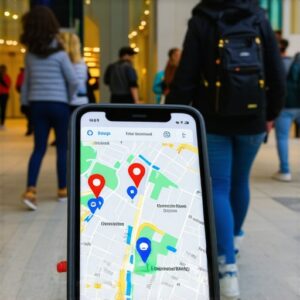
In the high-stakes world of aesthetic medicine, the difference between a fully booked calendar and a quiet waiting room often comes down to a few pixels on a smartphone screen. For med spa owners, the local market is the lifeblood of the business. Whether you are offering neurotoxins, dermal fillers, or high-end laser treatments, your patients are searching for you within a 5- to 15-mile radius. However, an alarming trend has emerged: established, high-quality practices are losing significant market share to newer, less experienced clinics. Why? Because in the digital age, visibility is the new currency.
If your clinic does not appear in the “Top 3” Google Map Pack – the coveted box at the top of search results – you effectively do not exist to 80% of local searchers. While many med spa owners spend thousands of dollars on interior design and high-end equipment, they often neglect the very gateway that brings patients through the door. Research indicates that most med spas fail to capture local leads not because of their clinical outcomes, but because they have prioritized the wrong visibility strategies. As a digital marketing expert who has navigated the complexities of med spa growth at MDConsultingNY, I have seen firsthand how easily a premier clinic can be sidelined by simple, avoidable technical errors. If you aren’t dominating local seo for med spas, you are essentially subsidizing your competitor’s growth.
While social media platforms like Instagram are excellent for establishing “vibes” and showcasing before-and-after photos, Google is where patients go when they are ready to book. This article will dissect the three critical errors currently driving your potential patients into the arms of the clinic down the street.
Error #1: The “Instagram Trap” & Ignoring Search Intent
The most common mistake I encounter in med spa marketing is what I call the “Instagram Trap.” Med spa owners are naturally visual people. They invest heavily in high-production videos, influencer partnerships, and daily stories. While these are valuable for brand awareness, they suffer from a fundamental flaw: they rely on “discovery” rather than “intent.”
According to research by Stranded.me, the conversion rate for a user browsing social media is significantly lower than that of a user performing a Google search. When a patient searches for “Lip filler near me” or “Botox in [City Name],” they have already moved past the consideration phase. They have a problem (fine lines, volume loss) and are looking for an immediate solution. If your practice is not optimized to capture this high-intent traffic, you are losing the most profitable leads in the industry.
The foundation of capturing this intent is google business profile optimization. Many med spas treat their Google Business Profile (GBP) as a static yellow-pages listing. In reality, it is a dynamic lead-generation engine. Without a robust strategy to rank google business profile listings, your spa is invisible at the exact moment a patient is ready to spend money. Social media is a “pull” strategy, but search is a “demand fulfillment” strategy. If you aren’t there to fulfill the demand, your competitor will be.
Furthermore, relying solely on social media makes your business vulnerable to algorithm shifts. A single change in Instagram’s reach can decimate your lead flow. Conversely, a strong presence in the local map pack provides a steady, predictable stream of patients. To truly compete, you must utilize a professional google maps ranking service to ensure your technical SEO matches the quality of your aesthetic work.
Error #2: Category Mismatch & Service Neglect
The second error is more technical but equally devastating: failing to align your Google Business Profile with the way Google’s algorithm understands your business. Many med spas suffer from a “category mismatch.” For instance, a clinic might mistakenly set its primary category as “Beauty Salon” instead of “Medical Spa.” While this seems like a minor distinction, it is a critical factor in google map pack ranking factors.
Google uses categories to determine relevance. If your primary category is “Beauty Salon,” Google is less likely to show your profile to someone searching for “CoolSculpting” or “Medical-grade chemical peels.” Research from industry experts like those featured in YouTube’s Google Maps Secrets highlights that “Pre-defined Services” are often the most underutilized tool in a med spa’s arsenal. You must manually add every service you offer – from Microneedling to Kybella – into the services section of your GBP. If Google doesn’t see the specific service listed, it cannot confidently rank you for those specific keywords.
Many owners wonder Why Your Business Profile Stopped Showing Up in searches they previously dominated. Often, it’s because a competitor has more accurately mapped their services to Google’s internal taxonomy. Additionally, Why Relying on Automated SEO Tools Often Leads to Map Pack Drop-offs is a lesson many learn too late. Automated tools often miss the nuance of med spa categories, leading to a generic profile that fails to trigger the local algorithm for high-value medical keywords.
To fix this, you must audit your primary and secondary categories. Ensure “Medical Spa” is your primary category if you perform clinical procedures. Then, fill out every service description with keyword-rich text that explains the benefits of the treatment, the technology used (e.g., “Soprano Ice Platinum” for laser hair removal), and the expected results. This level of detail tells Google that you are a highly relevant match for the user’s specific query.
Error #3: The Interaction & Trust Gap
The third error is perhaps the most visible to potential patients: the interaction gap. In the aesthetic industry, trust is everything. A patient is literally putting their face and body in your hands. If your Google Business Profile shows a string of unanswered reviews or, worse, a “ghost town” profile with no updates or posts, you are signaling a lack of professionalism.
A successful google review strategy is not just about the number of stars; it’s about the frequency and the interaction. Google’s algorithm tracks how quickly and consistently you respond to reviews. Failing to do so is a major review response mistake that can tank your rankings. When you respond to a review, you aren’t just talking to that one patient; you are demonstrating to Google and every future patient that you are active, attentive, and reliable. See our guide on the review response mistake that sends customers straight to your rivals.
Furthermore, many med spas fail to use the “Google Updates” feature (formerly Google Posts). By regularly posting about promotions, new equipment, or staff certifications, you send “freshness” signals to the algorithm. This interaction shows that your business is thriving. If you find your rankings slipping, it may be time to look into professional google maps seo tools to track your engagement metrics against your competitors. High-ticket patients look for social proof and responsiveness. If a competitor has 50 reviews and responds to every single one, while you have 200 reviews but haven’t replied in six months, the competitor will often win the click.
Why Newer Clinics are Winning the Local War
It is a frustrating reality for many veteran med spa owners: a clinic that opened six months ago is suddenly outranking a practice that has been a community staple for a decade. This happens because newer clinics are often more agile with their digital strategy. They recognize that they don’t have the luxury of “word of mouth” yet, so they lean heavily into local seo software and gmb seo tools from day one.
These new entrants are often losing local patients to newer clinics because the veterans are resting on their laurels. Newer clinics focus on google maps lead generation as their primary growth driver. They optimize for the local map pack seo from the moment they get their keys, ensuring that when a local resident searches for a treatment, the new clinic appears as the fresh, modern, and highly-rated choice. To reclaim your dominance, you must treat your local SEO with the same clinical precision you use for your aesthetic procedures.
Conclusion & Your Action Plan
Dominating the local market requires more than just being a great injector; it requires being the most visible option in your city. By avoiding the “Instagram Trap,” perfecting your GBP categories, and closing the interaction gap, you can stop the flow of patients to your competitors. The path to the top of the Map Pack involves a consistent google review strategy and a commitment to google business profile optimization.
Don’t let another month go by where your competitors harvest the leads that should be yours. Perform a comprehensive audit of your categories, fill out your service descriptions, and start engaging with your patients online. If you are ready to reclaim your local dominance and significantly rank google business profile listings for the long term, consider partnering with a specialized google maps ranking service. The patients are searching – make sure it’s your door they walk through.