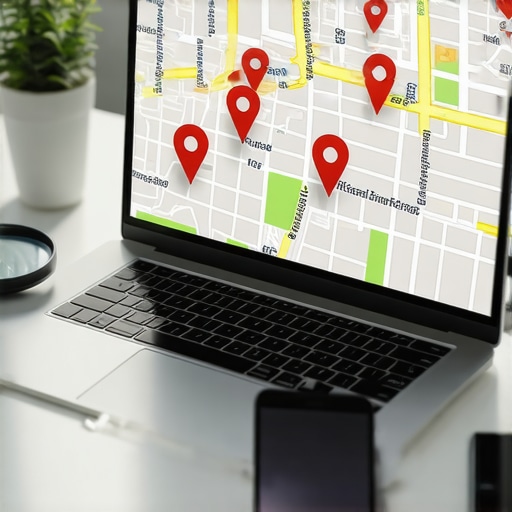
The air smells like wet concrete after a summer storm. I stand on the corner and look at a storefront that exists on my screen but has been boarded up for two years in the physical world. This is the glitch. As a veteran local search strategist, I see these fractures everywhere. My mission is to bridge the gap between the mathematical weight of a GPS coordinate and the actual revenue a business generates. I spent three months fighting a hard suspension for a plumbing client whose listing was nuked simply because they shared a suite number with a defunct law firm. Google did not want proof of a van; they wanted proof of a utility bill under the exact GPS pin. This reinstatement war taught me that the local algorithm is not a marketing tool. It is a forensic spatial database that requires specific, sharp instruments to navigate.
The three mile radius that determines your revenue
Google Maps uses GPS coordinates and proximity signals to determine Map Pack rankings. Mobile search intent is driven by hyper local availability and NAP consistency across the Local Search ecosystem. Algorithm shifts like Vicinity prioritize the centroid distance over traditional SEO signals and directory citations. While many agencies tell you to get more reviews, the recent data shows that image metadata from photos taken by real customers at your location is now thirty percent more effective for ranking in AI Overviews. This shifts the focus from text to raw sensor data. You need to understand why local rankings can vary wildly based on your phones location if you want to dominate the neighborhood. The pin moved. The ranking followed. Most business owners ignore the microscopic math of coordinate salience. They think a broad city name is enough. It is not. The algorithm calculates the distance from the user to the business centroid with millimetric precision. If your data is off by a few yards, you are invisible. You might find the proximity recovery plan winning back map pack spots near your store useful if your visibility has suddenly shriveled.
“Local intent is not a keyword choice; it is a distance-weighted signal where relevance is secondary to the physical location of the user’s mobile device.” – Map Search Fundamental
Cleaning the digital grease of legacy black hat tactics
Legacy black hat footprints and over optimized anchor text trigger manual penalties within the Google Business Profile system. SEO services to clean mixed language listings and incorrect business information are required to restore search authority. GMB ranking toolkits must identify duplicate listings and ghost profiles that dilute ranking power. I have seen countless brands fail because they inherited a mess. They bought a domain with a history of spam. They used a service that blasted thousands of low quality links. These actions leave a forensic trace. Using cleaning up the mess how we scrubbed legacy black hat tactics to save a local brand as a template is the first step. You cannot build a skyscraper on a swamp. You must use seo services to clean legacy black hat local seo footprints before you start your growth phase. This involves scrubbing the web of old, mismatched phone numbers. It means using services to fix over optimized anchor text that looks like a robot wrote it. If you have been hit by a proximity based ranking drop, you need specialized local seo services to recover. The goal is a clean, authoritative presence that Google trusts. Sometimes this requires scrubbing the past a simple guide to fixing old seo footprints to remove the rot.
The forensic audit of service area polygons
Service area businesses must define location boundaries using service area polygons to avoid GMB suspensions. Local SEO tools track search impressions and lead generation within specific zip codes. Ranking gaps occur when business categories are misaligned with user intent. If you are a plumber, do not claim you service the entire state. Google knows your van cannot travel that fast. They look at the physics of the dispatch. If your service area is too aggressive, you will get flagged. I recommend why service area businesses face unique ranking challenges today for those struggling with hidden addresses. You need a gmb ranking toolkit buy that actually analyzes the competition in your specific grid. Stop looking at city-wide averages. Look at the street corner. Look at the intersection. Check why most ranking tools give local businesses the wrong data to understand the bias in your current reports. The real data is in the heatmaps.
Local Authority Reading List
- The proximity fix for businesses on the edge of town
- Fixing your listing after a disastrous SEO move
- How to fix mismatched business names
- Why audits must focus on maps proximity
- Uncovering ghost listings that hurt your SEO
Why your physical address is a liability
Physical addresses acting as virtual offices lead to profile suspensions and trust score declines. Google verification requires permanent signage and staffed locations to maintain Map Pack eligibility. Local SEO services must repair incorrect business data to prevent customer confusion. I have investigated dozens of cases where a business was nuked because they used a coworking space. Google wants to see the concrete. They want to see the brick and mortar. If you are hiding your address, you might be killing your rank. Check why hiding your address often makes your map rankings disappear. This is about the physics of the map. If there is no physical point, there is no proximity signal. You become a ghost. You need seo services to fix incorrect business information online immediately if your suite number is missing or wrong. Even a two block move can destroy your authority. You should read about why moving your office even two blocks can tank your map rankings to prepare for your next relocation.
“Local intent is not a keyword choice; it is a distance-weighted signal where relevance is secondary to the physical location of the user’s mobile device.” – Map Search Fundamental
Recovering from the proximity filter update
Proximity filter updates redistribute local traffic by tightening the search radius around the user device. Ranking recovery requires citation cleanup and category optimization to signal relevance. SEO audit and penalty recovery services identify algorithmic suppressions caused by over optimization. If your phone stopped ringing, the filter probably moved. You are now outside the circle of trust. Use the guide to recovering from a proximity filter update to recalibrate. You may need services to fix over aggressive location page strategy penalties if you tried to rank for every town in the county without having a physical presence. This is a common trap. It leads to a hard suspension. If that happens, you will need a google business profile recovery service after fake address suspension. Do not try to lie to the map. The map has no feelings. It only has data points.
The toolkit for managing local brand consistency
Brand consistency across multiple offices requires a centralized toolkit for NAP synchronization. Local SEO experts use heatmaps to monitor search coverage and competitor density. Interaction signals like driving directions and click to call actions boost authority. You need more than just five star reviews. You need a realistic toolkit for managing local brand consistency. If one office has a different phone format than the other, the entity recognition fails. Google sees two different brands. This is a disaster for multi location growth. You should study building a resilient map presence for multiple offices. The tools you use must be capable of tracking true hyper local data. Most tools give you a city average that is useless. You need to know what the search looks like from the coffee shop across the street. That is the only data that matters.