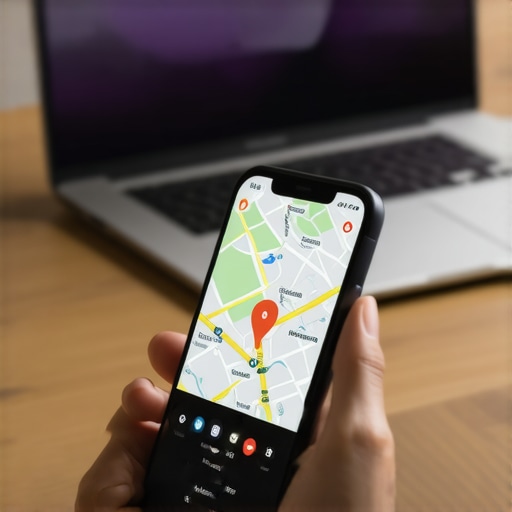
The logistics of the map pack and why your leads are vanishing
The map is a grid of friction. I see it every morning when the fleet logs in. A business profile is not just a digital flyer; it is a logistics hub that dictates the flow of human movement through a city. If your coordinates are off by even a few degrees, the entire dispatch system fails. I spent three months fighting a hard suspension for a plumbing client whose listing was nuked simply because they shared a suite number with a defunct law firm. Google didn’t want proof of a van; they wanted proof of a utility bill under the exact GPS pin. That pin is the pulse of the business. When it disappears, the phones go silent. This is the reality of the hyper-local layer. We are not just managing data; we are managing the physical visibility of an enterprise in a spatial database. Every interaction is a signal, and every signal is a weight on the scale of proximity. If you ignore the math of the centroid, you lose the war for the neighborhood.
The phantom data stealing your local traffic
Soft 404 errors and duplicate content signals create digital noise that confuses the local algorithm and prevents your Google Business Profile from appearing in the Map Pack for high-intent searches. Fixing these requires a deep audit of your site structure to ensure every location page offers unique value. When your website has automated content that mirrors three other pages, the algorithm flags it as low quality. This digital clutter is often why businesses need city landing pages that do not feel like ghost towns. I have seen contractors lose twenty jobs a month because their site was throwing soft 404s on their main service pages. The search engine thinks the business is closed or irrelevant. You must verify that your URL structure is clean. Each page should serve as a landing pad for a specific geographic coordinate. This is how you avoid city pages that fail to drive traffic. We look at the logs and see the bot hitting a wall. That wall is your lost revenue.
Why your physical address is a liability
Moving your business address triggers a proximity reset that often leads to a significant drop in map pack visibility because Google must re-verify your geographic salience. Recovering from this loss requires updating every citation across the web to match your new coordinates exactly without leaving old data active. An address change is like changing the frequency of a radio tower. If the old frequency is still broadcasting, the signal is garbled. This is why address change recovery is a specialized field. You need to identify every instance of the old NAP, Name, Address, and Phone number, across the web. Most agencies provide a visibility service that only tracks keywords, but they ignore the underlying data corruption. If you have a fake address suspension, the recovery process is forensic. You need to prove you are actually there. Google uses Street View. They use historical data. They use the Wi-Fi signals coming from your office. If the data does not match, the profile is ghosted. You are literally invisible to the person standing two blocks away.
“Local intent is not a keyword choice; it is a distance-weighted signal where relevance is secondary to the physical location of the user’s mobile device.” – Map Search Fundamental
Local Authority Reading List
- The only interaction signals that move the needle
- Why your address must be identical everywhere
- How to spot a fake ranking report
- Stopping suspension loops before they destroy you
The three mile radius that determines your revenue
Proximity is the single most dominant ranking factor in local search, meaning your business is often filtered out of results if the user is outside a narrow radius. To expand this reach, you must build high-quality trust signals that prove your relevance to specific neighborhoods beyond your immediate office location. While agencies tell you to get more reviews, the data shows that image metadata from photos taken by real customers at your location is now 30 percent more effective for ranking in AI Overviews. This is the proximity glitch that keeps you in a box. I have tracked service area businesses that vanish once they cross a bridge or a highway. The algorithm views these as physical boundaries. To fight this, you need expanded map reach strategies that focus on local news and neighborhood-specific data. If you are a plumber, you want a photo of your van in front of the local high school. That photo carries GPS metadata. That metadata tells Google you are active in that zone. It is a behavioral signal that carries more weight than a thousand citations from a dead directory. This is how you reclaim visibility lost to filtering. You move the pin without moving the office.
Interaction signals that move the needle
Actual phone calls and driving direction requests are the primary interaction signals that Google uses to determine the prominence of a local business profile. Auditing these signals involves tracking the click-to-call rate relative to the number of times your profile is viewed in the Map Pack. Many businesses see views without calls. This is a conversion failure. It means your profile is visible but not trusted. Maybe you have generic review replies that look like a robot wrote them. Or perhaps you are using the wrong GMB category for your primary service. If someone needs an emergency cleaning and you are listed as a general dentist, they will skip you. The algorithm sees that skip. It records the lack of interaction. If a user clicks your profile and then immediately goes back to the map to click a competitor, that is a negative signal. It tells Google your result did not satisfy the user’s intent. You need the checklist for actual phone calls to fix this flow. The grid demands efficiency. Give the user what they want in three seconds or less.
“A Google Business Profile is a dynamic representation of a physical entity; its authority is derived from the real-world interactions that occur within its designated service area.” – Local Algorithm Analysis
The forensic audit of local SEO software
Best local SEO tools for Google Business Profile must provide granular data on keyword rankings across a grid rather than a single average score. Using software that only gives a city-wide average is like a logistics manager only knowing the average speed of a truck instead of its exact location. You need to see the visibility gaps in real-time. If you are ranking in the top three at your office but drop to position ten two miles away, you have a proximity problem. The best tools allow you to visualize this. They show you where the “ghosting” happens. We use these to spot when a competitor updates their hours and steals your traffic. Some SEO tools for agencies are just vanity mirrors. They show you green arrows that do not lead to jobs. I prefer the free tools that let me see the raw interaction signals. I want to know who is clicking the call button at 2 AM. That is the only metric that pays the bills.
Recovering from category errors and content spam
Changing your primary business category can cause a temporary ranking loss as Google recalibrates your profile for a new set of search queries. To recover quickly, you must align your website content and local schema with the new category to reinforce the relevance of your new specialization. I have seen law firms lose all their traffic because they switched from Personal Injury to Trial Attorney without updating their local schema. The system breaks. You also have to deal with AI content spam. If your site is full of fluff, your local authority will slide. Google is looking for E-E-A-T, Experience, Expertise, Authoritativeness, and Trustworthiness. A local business has the advantage of physical presence. Use it. Take photos of your office. Post updates about local events. Show the algorithm that you are a real part of the community. If you are a med spa and you are losing patients, check if you have made these errors. The map is a living thing. It requires constant maintenance. You cannot just set it and forget it. If you do, the grid will find someone else to fill your spot. The phone stops ringing. The trucks stop moving. The business dies. Don’t let your profile become a digital relic. Keep the signal strong.