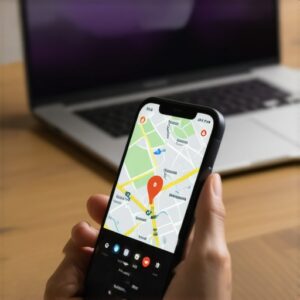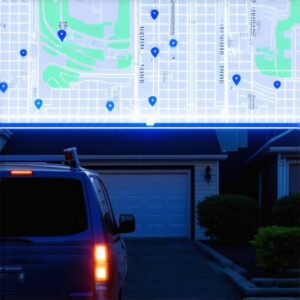
The morning rain hits the pavement outside a small plumbing shop. I smell the wet concrete and the metallic tang of old pipes. I see the sign in the window, faded by the sun. Inside, a business owner is staring at a ranking report full of bright green circles and upward arrows. I know that look. It is the look of someone being lied to with data. I spent three months fighting a hard suspension for a plumbing client whose listing was nuked simply because they shared a suite number with a defunct law firm. Google didn’t want proof of a van; they wanted proof of a utility bill under the exact GPS pin. While they were fighting for their life, their previous agency was sending reports saying everything was fine. That agency was looking through a clean lens while the reality on the street was a blurred mess. If your current reports do not match the silence of your phone, you are looking at a staged photo rather than a candid reality.
The illusion of the green circle
Fake ranking reports often rely on a single GPS point to show success while ignoring the surrounding neighborhoods. To spot a fraud, look for average rank metrics that hide the fact that your business is invisible just two blocks away from your actual physical office location. Most agencies use rank trackers set to a fixed point, usually right on top of your front door. Of course you rank number one when you are standing in your own lobby. That is not SEO; that is just how physics works. Real success is measured by how far that ranking carries into the next zip code. You need to understand how to measure your true maps proximity without biased tracking if you want to see the glitches in their data. If the report shows you at the top but your lead flow is dry, they are likely relying on average rank tracking which is a classic vanity metric used to mask failure.
“Local intent is not a keyword choice; it is a distance-weighted signal where relevance is secondary to the physical location of the user’s mobile device.” – Map Search Fundamental
Why your physical address is a liability
Your address acts as a centroid for search results, but if your agency is using keyword stuffing in the business name, it creates a proximity glitch. This results in your profile being filtered out in favor of competitors who maintain cleaner data and higher interaction signals nearby. The algorithm is a spatial database that values logic over keywords. When an agency stuffs your business name with city names or service terms, they might get a temporary boost. Eventually, the proximity filter catches up. This is the proximity glitch that keeps your business out of the local map pack despite what those fake reports say. If you have recently expanded, you might notice volatile map rankings after expansion because the engine is trying to reconcile your new pin with your old authority. Agencies often ignore these micro-shifts, reporting only the macro-success that does not exist on the ground.
Local Authority Reading List
The ghost in the GPS coordinates
Hidden errors in your technical setup, such as broken JSON-LD or mismatched NAP data, cause Google to lose trust in your location. When an agency reports high visibility but your phone remains silent, it usually means you are suffering from proximity ghosting that hides you. I see this in the code every day. An agency will claim they have optimized your site, but the schema is pointing to a different latitude than your Google Business Profile. This creates a digital stutter. You can spot the proximity ghosting by looking at your search console data versus your map insights. If they do not align, your agency is likely using JSON-LD schema incorrectly. This is a common issue for professional services; for instance, many specific ranking mistakes keep local lawyers out of the map pack because their office suite numbers are formatted inconsistently across the web.
The three mile radius that determines your revenue
Most local businesses lose eighty percent of their potential leads because their profile only ranks within a tiny three mile radius. Agencies often hide this by only tracking rankings at the office location rather than simulating searches from the actual neighborhoods where high value customers live. A report that only shows a single green dot is a lie of omission. You need to see a grid. If your visibility drops off a cliff the moment you cross a major intersection, your agency is failing the proximity test. This is why your current visibility service is failing the proximity test in 2025. You should be asking for heat maps, not spreadsheets. Without a grid-based view, you won’t know if you are only showing up in one zip code. Real growth requires pushing that boundary outward, one block at a time, through localized content and real-world interaction signals.
“A business profile is a proximity beacon; its strength is determined by the historical density of mobile device pings within its service area polygon.” – Local Search Intelligence Quarterly
How to audit your local authority without a toolkit
Auditing your own profile requires looking at interaction signals like driving direction requests and click-through rates from specific zip codes. If your agency is not reporting these behavioral metrics, they are likely hiding a lack of actual engagement from real local customers in your city. Stop looking at rank charts. Start looking at your actual Google Business Profile insights for interaction data. If the agency says you are number one but your driving direction requests are zero, nobody is actually finding you. You should stop checking rankings and start auditing interaction signals immediately. This is how you find the truth. Use free tools to spot ranking gaps that your agency conveniently leaves out of their monthly PDF. A real strategist will show you the ugly parts of the map along with the wins.
The specific signals that move the needle
Modern local SEO relies on three core interaction signals: the frequency of click-to-calls, the volume of local photos uploaded by users, and the velocity of reviews. Improving these signals is more effective than simply building citations on old, dead directories that Google now ignores. The algorithm has moved past simple NAP consistency. It now looks for a pulse. Are people taking photos at your location? Are they leaving reviews that mention specific services? These interaction signals move the needle more than any backlink package. If your agency is still talking about citation blasts, they are living in 2015. You need signals that actually drive visibility in a high-competition environment. Even local news mentions can be leveraged to prove to Google that you are a real, relevant entity in your community.
Recovering from the shadow of bad data
The concrete is dry now. The plumbing shop owner realizes the green arrows in his report were just digital smoke. He was paying for a view of the world that didn’t exist. To fix this, you have to peel back the layers of over-optimization. You might need services to fix over optimized anchor text if your agency was too aggressive. You might need citation cleanup tactics to remove the ghost of old addresses. The path forward is not found in a fake report. It is found in the microscopic details of how a user interacts with your pin on a map. If you are ready to see the real map, you have to stop trusting the staged photo and start looking at the street level reality. Audit your agency. Check the grid. Demand the truth before your business becomes a ghost in the machine.