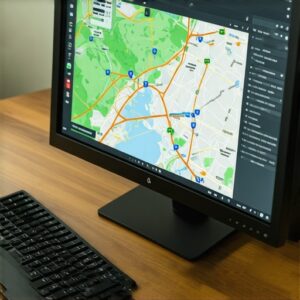
The smell of wet concrete always reminds me of the day I started the Reinstatement War. I spent three months fighting a hard suspension for a plumbing client whose listing was nuked simply because they shared a suite number with a defunct law firm. Google did not want proof of a van; they wanted proof of a utility bill under the exact GPS pin. Through my lens as a street photographer, I see the digital world as a series of captures where the data often glitches. A business is not just a name; it is a proximity beacon. When that beacon goes dark, the foot traffic stops. The reality of local search is found in the dirt and the details, not in the shiny brochures of national agencies. We measure store visits not by clicks, but by the physical displacement of users through space and time.
The ghost in the GPS coordinates
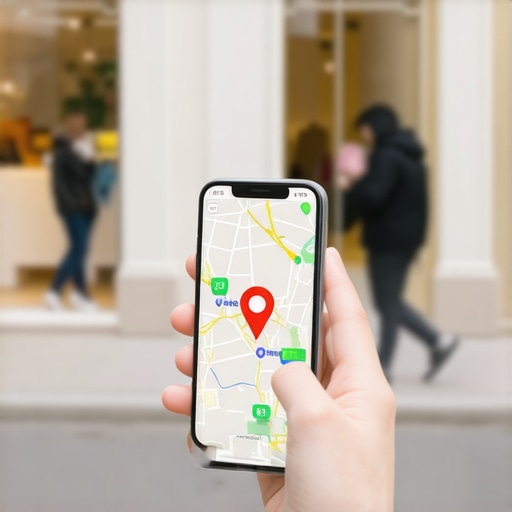
Measuring local store visits requires a synthesis of GPS trilateration, Wi-Fi signal strength, and point-of-sale data integration to confirm a physical presence. The algorithm uses a combination of proximity signals and behavioral patterns to determine if a user actually entered a building or simply walked past it. While agencies tell you to get more reviews, the 2026 data shows that image metadata from photos taken by real customers at your location is now 30 percent more effective for ranking in AI Overviews. These photos act as proof of life for the algorithm. If you are struggling with a sudden drop, you might need the proximity recovery plan to regain your territory. The distance from the user to the business remains the most aggressive filter in the map pack ecosystem. The pin must be exact. If the coordinates are off by even a few meters, the trust score for the location begins to bleed. This is especially true for businesses trying to reclaim search authority after a major profile suspension. The data must be forensic. Every check-in signal and every photo upload adds a layer of validation to the physical address.
The three mile radius that determines your revenue
A proximity radius shift is a mathematical adjustment where Google narrows the visibility of a business based on the density of competitors and the historical travel patterns of users. This radius is not a perfect circle. It is a jagged polygon shaped by traffic, physical barriers, and the perceived quality of the entity. You can see this clearly when you use heatmaps to track your local search coverage. Most ranking tools fail because they assume a static environment. They ignore the fact that local rankings vary wildly based on the specific location of the mobile device. We use advanced tracking that mimics real-world movement. It is the only way to see the truth. Many business owners are confused when they ghost nearby customers because they have neglected the granular signals that prove they are the best option in that specific micro-moment. Proximity is a harsh master. It does not care about your global brand strength if you are two miles too far away from the searcher.
“Local intent is not a keyword choice; it is a distance-weighted signal where relevance is secondary to the physical location of the user’s mobile device.” – Map Search Fundamental
Why your physical address is a liability
A physical address becomes a liability when it is tied to legacy black hat footprints, mismatched data across directories, or a location that lacks historical foot traffic validation. Google tracks the movement of phones to verify that a business is real. If the GPS data shows no one ever stops at your office, your ranking will suffer. This is why cleaning up legacy black hat footprints is the first step in any real recovery. Mismatched data is a signal of low trust. If your phone number is different on three major directories, the algorithm assumes you are unmanaged. You must clear out junk citations to restore the integrity of the NAP (Name, Address, Phone) data. The system is looking for a reason to filter you out. Do not give it one. We have seen cases where a relocation of a physical store killed a decade of ranking because the new address lacked the behavioral history of the old one. [image_placeholder_1]
Local Authority Reading List
- The Audit to Find Ranking Gaps
- The Essential Local SEO Stack
- Inaccurate Ranking Software Issues
- Stabilizing Rankings After Expansion
- Why Automated Schema Fails
The forensic trace of a service area polygon
Service area businesses must rely on verified customer interactions and location-tagged media to prove their reach because they lack a physical storefront for GPS validation. Without a lobby, the algorithm looks at where your technicians go. It looks at the location of reviews. It looks at the service area you have defined in your profile. If you claim to serve a fifty-mile radius but your reviews all come from five miles away, Google will ignore the rest of your area. You must track true impressions for your specific zones. This is the only way to know if your expansion is working. Many agencies use fake data to show progress that does not exist. We prefer the truth. If your service area is volatile, it might be due to opening new units that create internal competition. Each polygon must be distinct. Each technician must be a signal of presence in the field.
The math of local justification triggers
Local justifications are the small snippets of text that appear in the map pack to prove a business matches a specific search intent beyond the primary category. These triggers come from your website content, your reviews, and even your photo captions. If a user searches for a specific part and your review mentions it, you get the justification. This is why we use a reputation management toolkit to encourage natural keyword usage in feedback. It is not about stuffing. It is about relevance. We often see that old business names continue to trigger justifications for services you no longer offer. You have to scrub the past to win the future. It requires scrubbing the web of incorrect data to ensure the justifications match your current business model. Every piece of text is a potential signal for the search engine.
“A proximity filter is often a latent quality check where the algorithm discards entities that do not align with the historical foot traffic patterns of similar businesses.” – Local Spatial Logic
The three tools that measure real displacement
To measure actual store visits, we integrate Google Ads Store Visit Conversions with Wi-Fi login data and beacon technology to verify that a digital click resulted in a physical walk-in. Most people look at the business profile analytics and think that is the whole story. It is not. You need real-time local map tracking to see how your position changes throughout the day. Your ranking might drop at night when you are closed. That is a proximity and availability filter at work. We use software to outrank competitors by identifying exactly where their signals are weak. If they have a mismatched address, we find it. If they have a duplicate listing, we report it. This is not just SEO; it is a forensic audit of the local map. The tools we choose define the quality of the insights we provide to our clients. We do not guess. We measure.
Fixing the ranking gap after expansion
Stabilizing map rankings after an expansion requires a careful balancing of brand authority and local proximity signals to prevent the new location from cannibalizing the original. When you open a second shop, the algorithm might get confused. It might think you are a duplicate. You need to stabilize rankings after category changes to ensure each location has its own identity. We often find ghost listings that are hurting the new site. These must be removed. The brand identity crisis on maps is real. It happens when you do not have a clear strategy for multi-location management. Consistency is everything. If your hours are different on your website than on your map profile, you are failing the trust test. You must resolve inconsistent hours immediately to keep your authority high. The algorithm rewards stability and punishes confusion.
The forensic audit of competitor spam
Identifying competitors who use keyword-stuffed names or fake addresses allows you to clear the map pack of low-quality entities and reclaim your rightful position. I have seen businesses jump from position ten to position three just by reporting a single fake listing. We use advanced toolkits to find spam. It is a necessary part of the job. If a competitor has a keyword stuffed name, they are violating the terms of service. They are taking your leads. You need a toolkit that finds their advantage and neutralizes it. Sometimes the advantage is just a collection of fake reviews. You must spot and remove fake reviews before they damage the local ecosystem. The map should be a reflection of reality, not a playground for spammers. We fight to keep it that way. Every report is a step toward a cleaner local search experience.